
Article: Esthetician Suite Setup: The Complete Guide to Design, Furniture & Decor

Esthetician Suite Setup: The Complete Guide to Design, Furniture & Decor
Esthetician Suite Setup: The Complete Guide to Design, Furniture & Decor
The esthetician suite is one of the most powerful environments in the beauty industry — and one of the most underestimated. Unlike a lash room where clients spend their visit with eyes closed, facial clients experience your entire space. They sit in your consultation chair, study your product shelving, feel the warmth of your lighting, and decide whether this room feels like somewhere they want to spend 60–90 minutes every month.
A thoughtfully designed esthetician suite doesn't just look beautiful. It sells the experience before the facial begins. It justifies your prices without a word spoken. It turns a new client into a regular before their skin has even been cleansed.
This guide walks through every element of a successful esthetician suite setup — from furniture and lighting to aesthetic direction and the details that separate a forgettable room from one clients mention every time they book.
Why Suite Design Matters More for Estheticians
The facial treatment is fundamentally about relaxation, trust, and results. Your clients are investing in their skin — and they're placing significant trust in your hands, literally. The environment you create either amplifies that trust or subtly undermines it.
A clinical, functional-but-bare suite sends a message: this is a service transaction. A designed, intentional, sensory-considered suite sends a different message: you are being taken care of. That second message is what premium pricing sounds like before you've spoken a word.
Estheticians who charge $150–$300+ for their services consistently have one thing in common: a suite environment that visually justifies the price. It's not coincidence.
The Essential Furniture for an Esthetician Suite
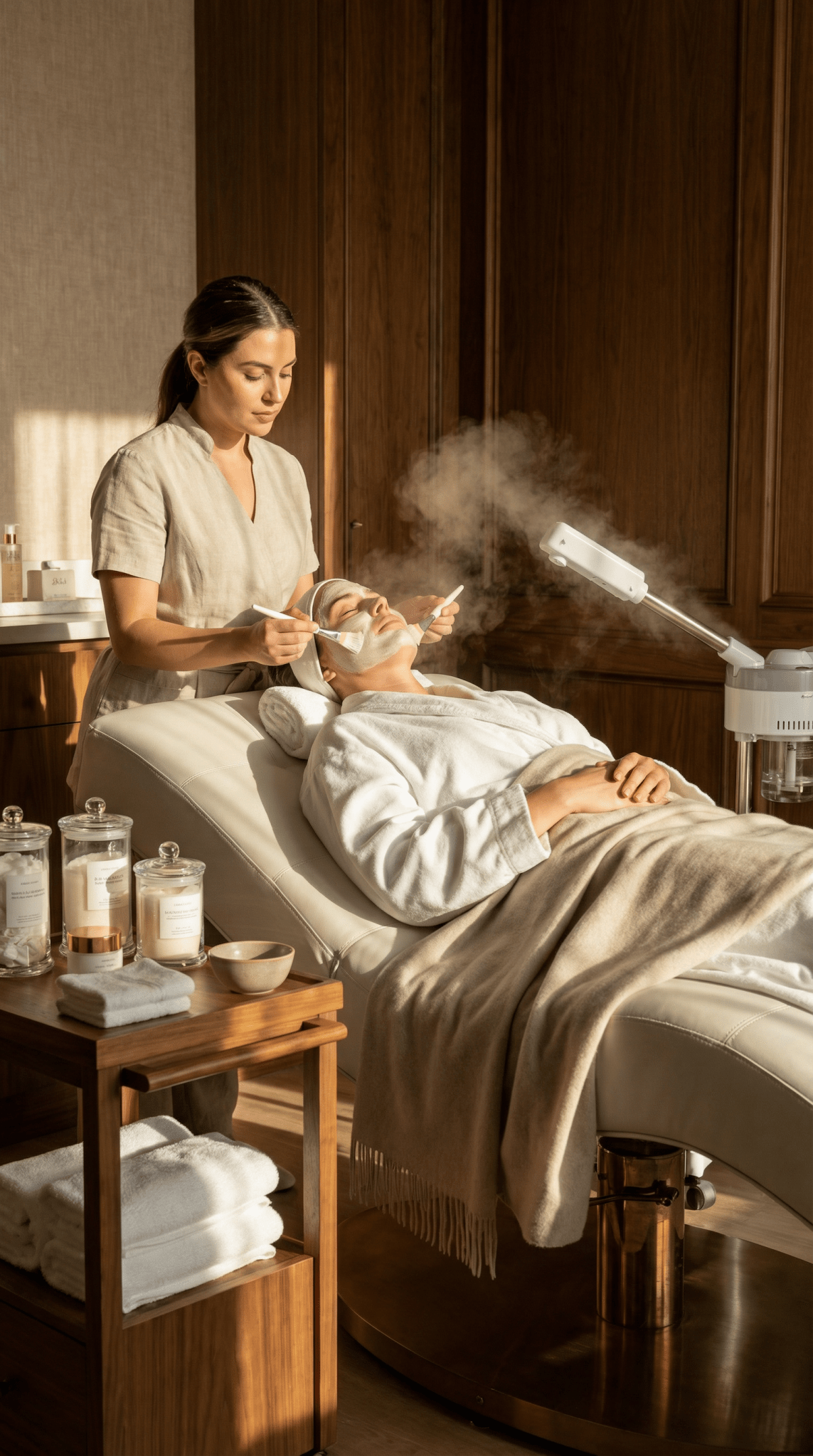
Your Esthetic Bed — The Room's Anchor Piece
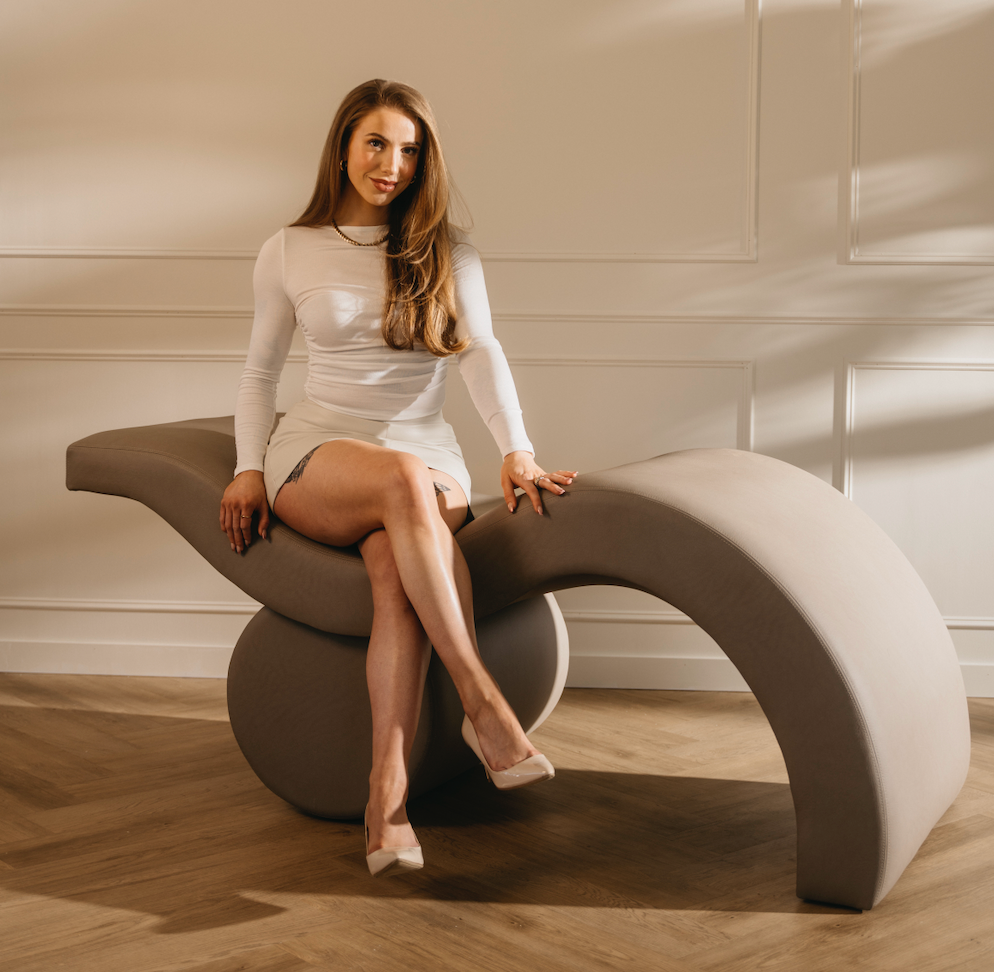
Your treatment bed is both the functional center of your practice and the piece that defines the room's quality signal. Choose it first, and choose it as though your entire aesthetic will be built around it — because it will.
What a great esthetic bed needs:
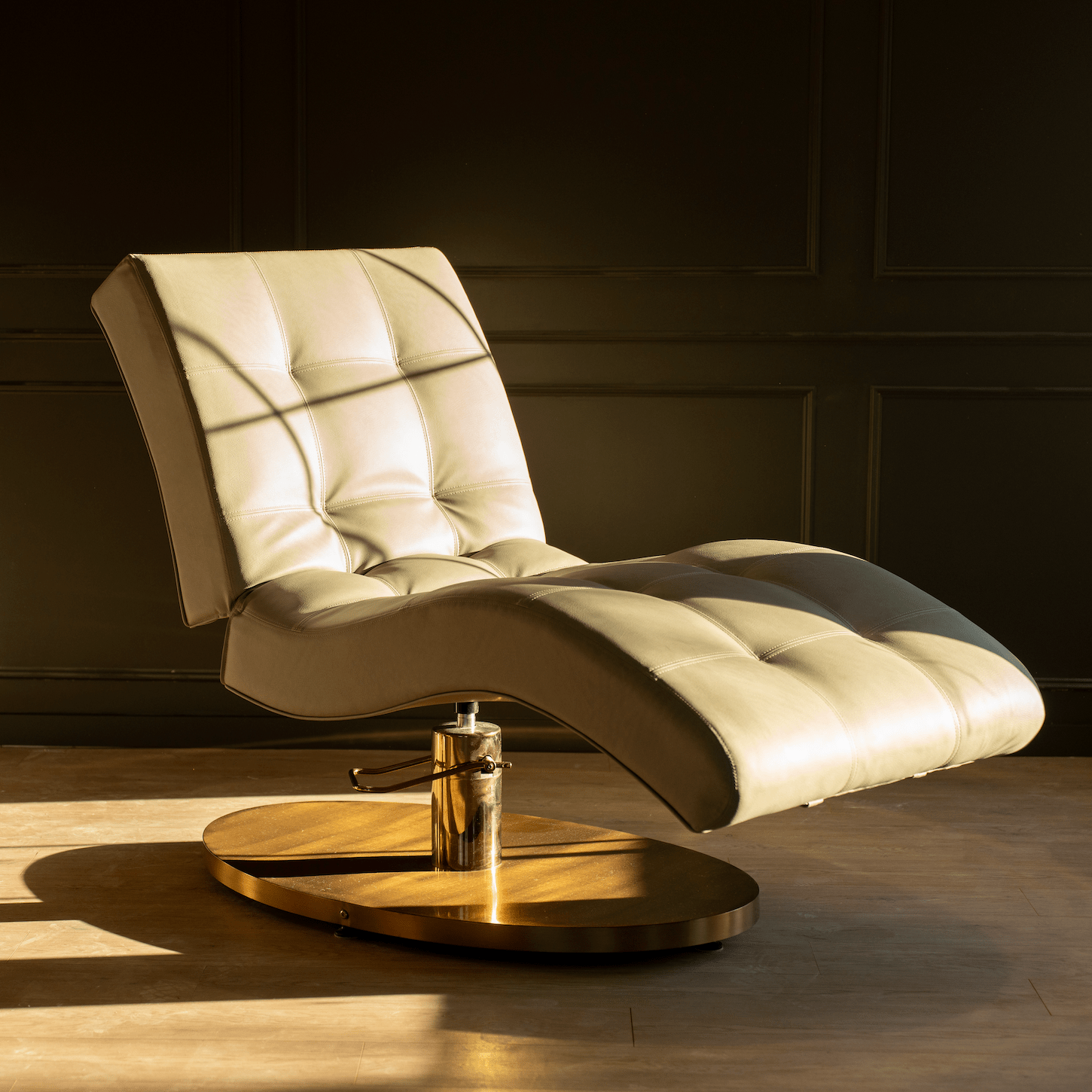
- Multi-position adjustability. Facial treatments require different positions for cleansing, extractions, massage, and masking. A bed with a fully articulating backrest, adjustable leg support, and electric height control gives you the flexibility to work precisely and your client the comfort to relax fully.
- Broad, comfortable surface. Narrow treatment tables are uncomfortable for extended services. Look for a width of 28–32 inches — wide enough that clients feel supported, not perched.
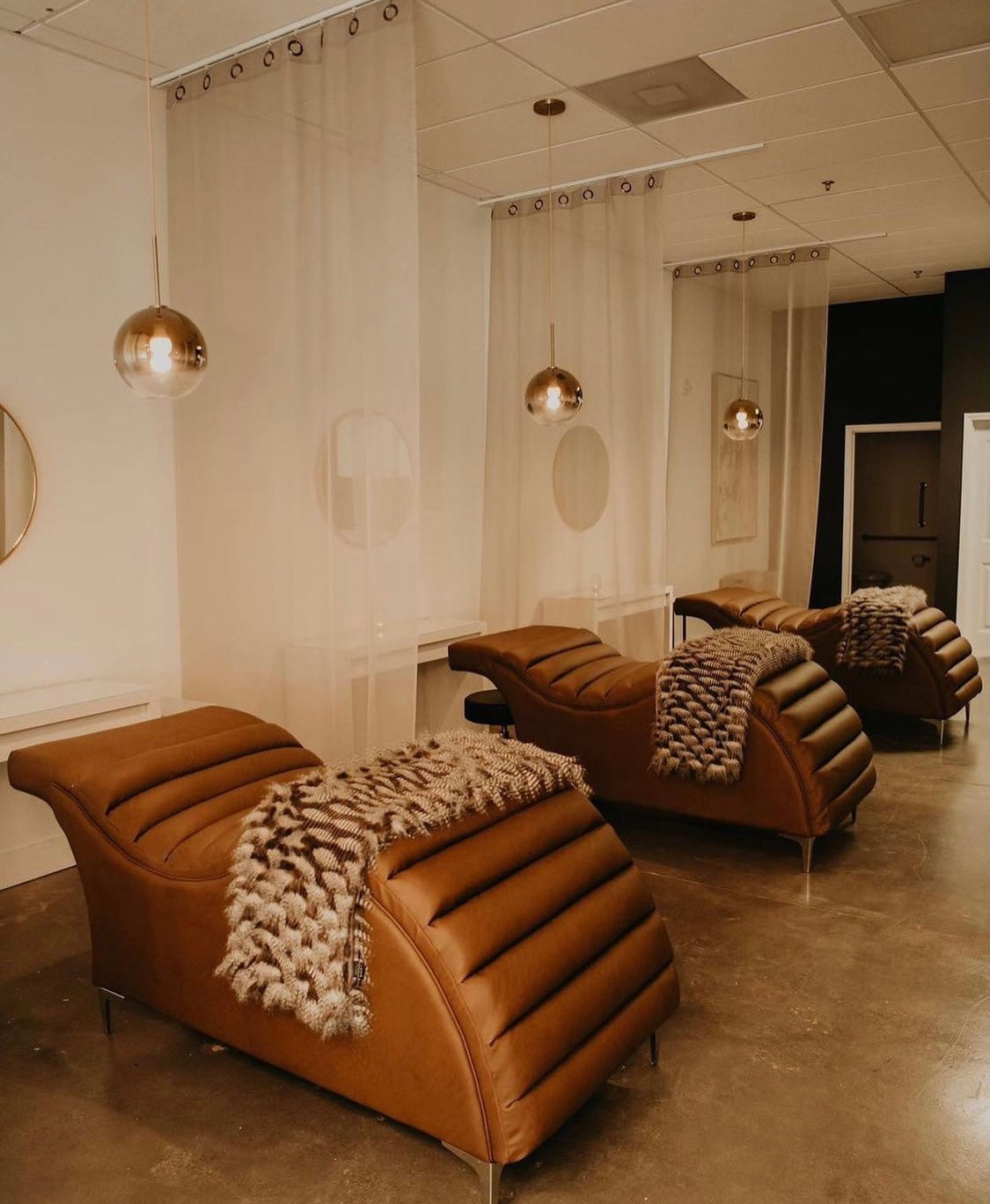
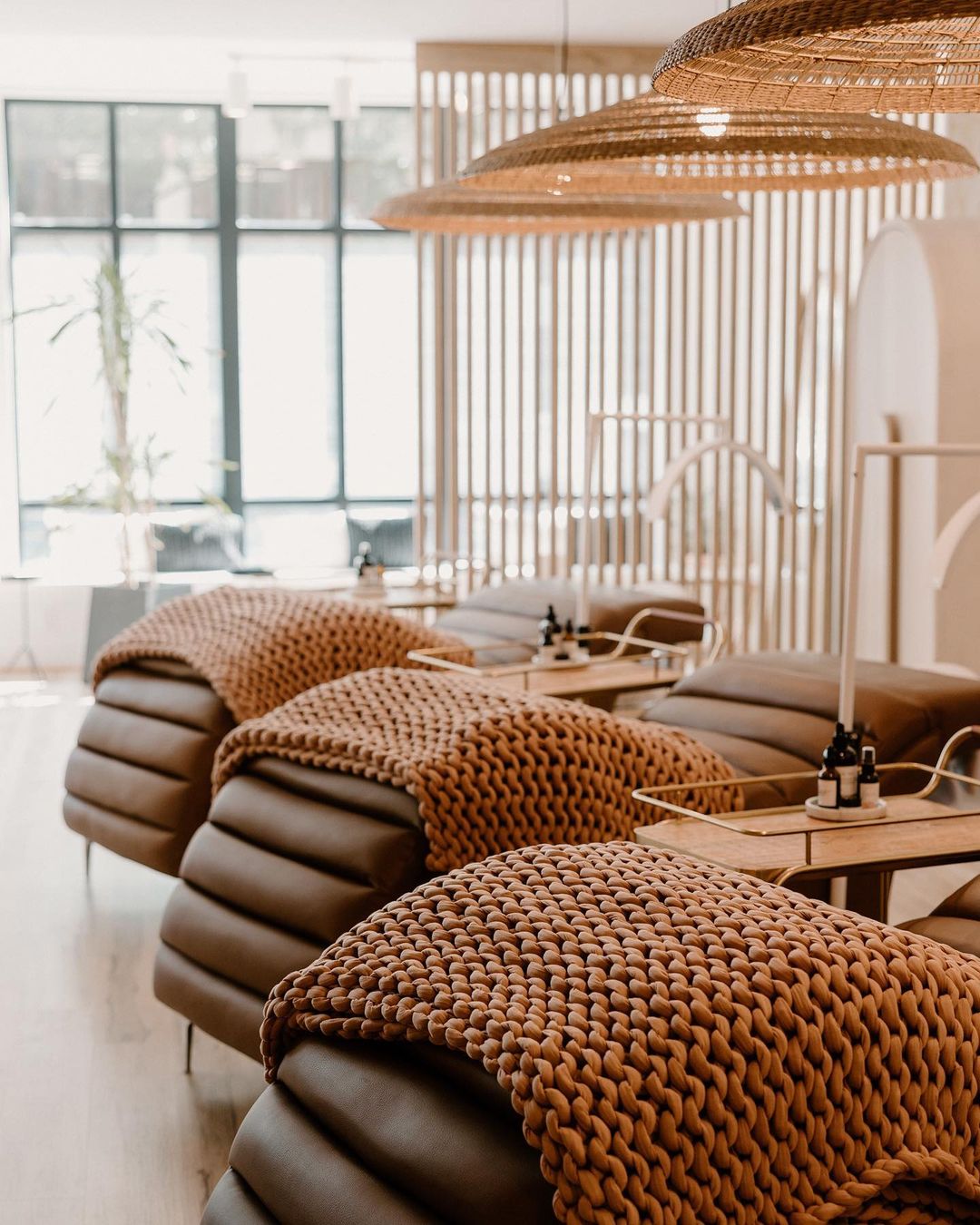
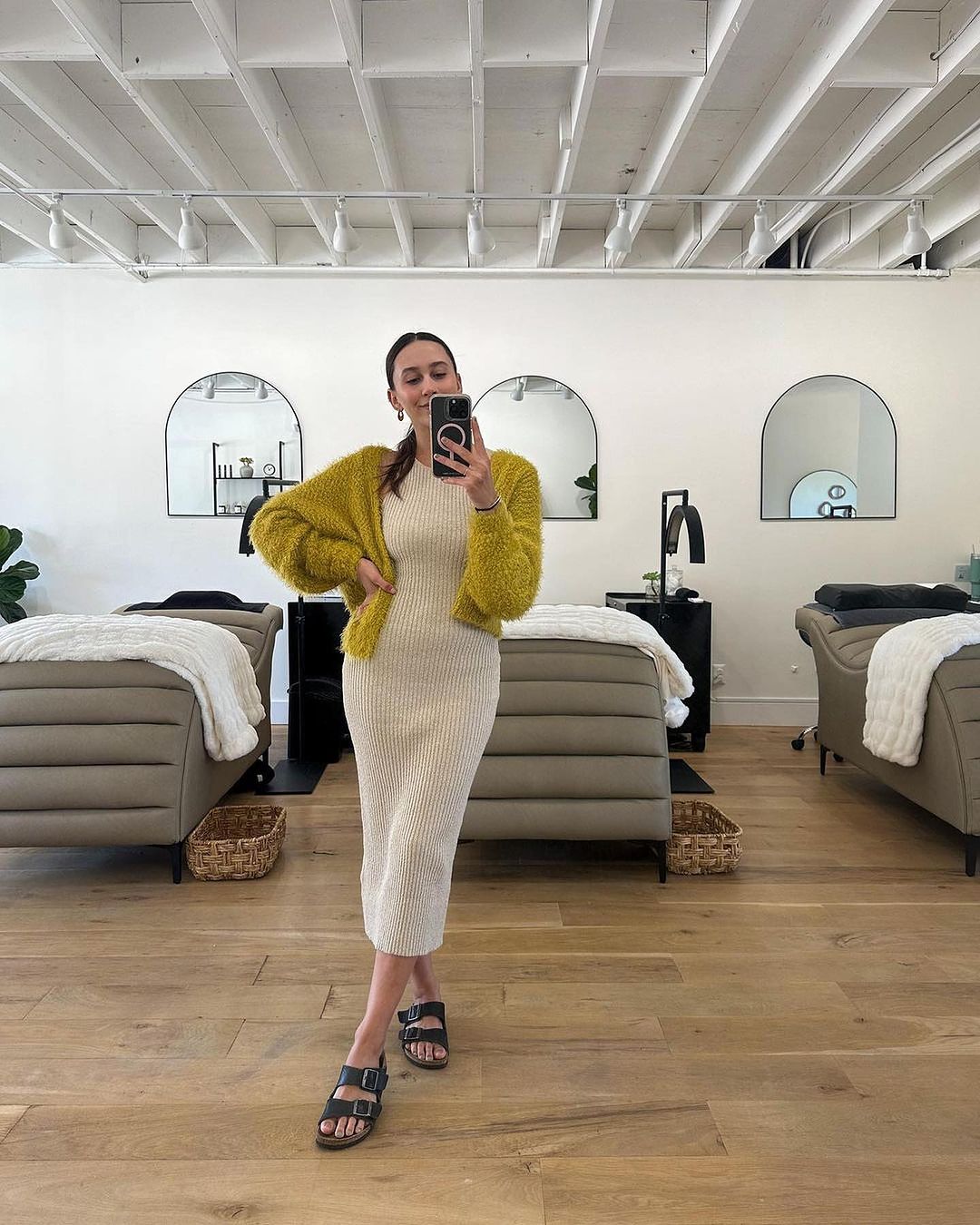
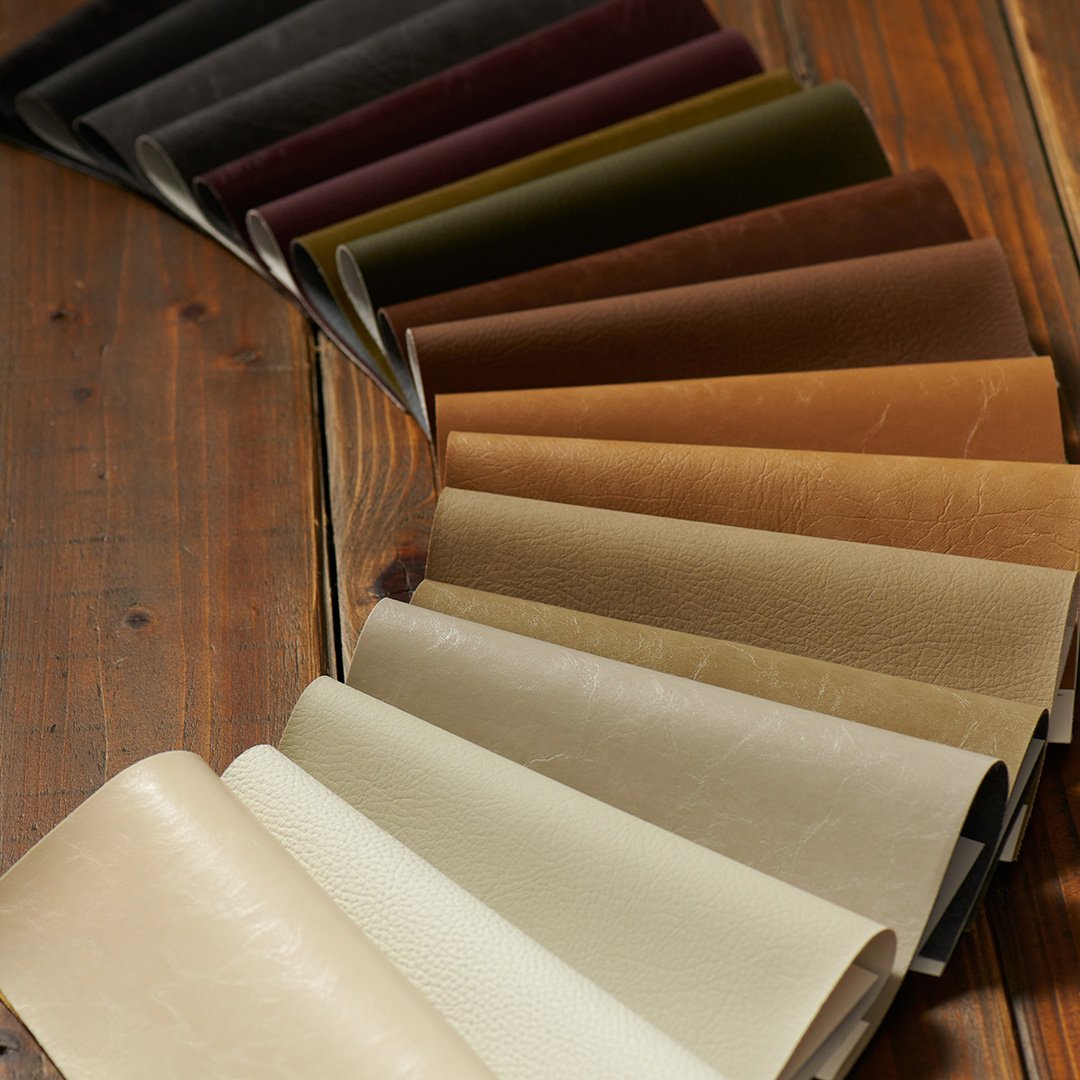
- Premium, warm upholstery. This is not a place to cut costs. The upholstery your client lies on for 75 minutes should feel luxurious, look beautiful in photos, and hold up against the sanitizing sprays, steamer mist, and product contact that happen every day of your career. Premium upholstery in a warm tone — cream, sage, blush, or caramel — anchors the room aesthetically in a way a clinical white bed simply cannot.
- Real wood or quality metal accents. A bed with real wood base accents or quality brushed metal hardware reads as premium. It adds warmth. It photographs differently than a plain white table on a steel base. This difference is subtle and it is real.
- Easy surface sanitation. Your bed needs to wipe clean thoroughly between every service. Premium upholstery with sealed stitching and a non-porous surface is both a sanitation and longevity consideration.
Your Work Stool
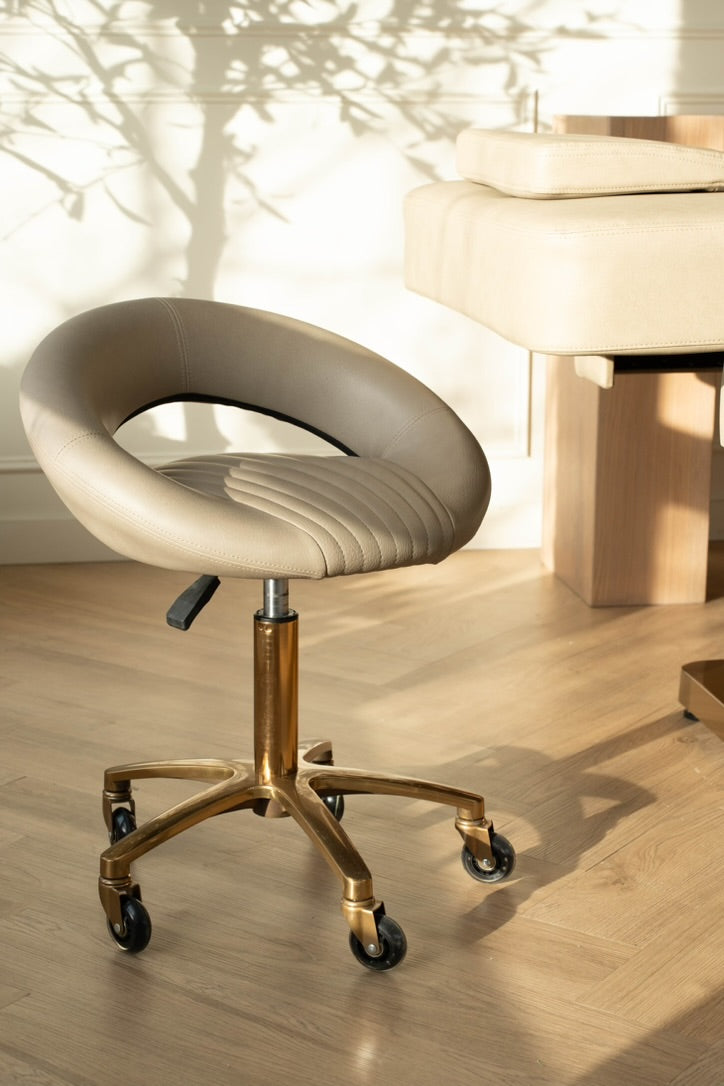
You'll be seated beside or at the head of your bed for the majority of your service day. Your stool needs to match your working height, support your back during extended sessions, and roll quietly and smoothly so you can reposition without interrupting a client's relaxation.
An adjustable ergonomic stool with back support is the right choice for extended facial work. Your physical longevity as an esthetician depends on getting this right.
The Trolley or Service Cart
Your service supplies — cleansers, exfoliants, toners, serums, masks, tools, and hot towels — need to be organized, accessible, and within arm's reach throughout every service. A well-chosen rolling trolley serves as both your workstation and a room design element.
Choose a trolley that fits your suite's aesthetic. A beautifully designed service cart in warm metal or wood tones is a room detail. An industrial steel utility cart with mismatched trays is not. In a 10×12 room, every piece is visible, and everything communicates either intentionality or oversight.
Facial Steamer
A professional facial steamer is an esthetic essential. Position it on a standalone arm or dedicated trolley extension rather than the main treatment trolley — it needs clearance for steam direction and shouldn't crowd your product setup. Choose a model that matches your room's visual direction.
Product and Supply Shelving
Estheticians carry more products than most beauty professionals — retail inventory, treatment supplies, seasonal additions. How you store and display these products is a significant aesthetic and business decision.
Open shelving with organized, curated product display creates a retail-adjacent visual that communicates expertise and abundance. When clients see 20 beautifully arranged products with clean labels and uniform spacing, they see a professional who knows their inventory and can guide them to the right solutions.
Enclosed cabinet storage is ideal for products not on display — bulk supplies, back bar inventory, equipment. Keeping your working storage concealed maintains the room's visual calm.
The combination of one beautiful open display shelf and an enclosed storage piece is a practical and aesthetic sweet spot for most esthetician suites.
Consultation Seating
Unlike lash or PMU clients, facial clients often arrive with questions — about skin concerns, products they've been using, treatments they're considering. If your room design immediately orients them to the treatment bed, you lose the natural opportunity for a grounded, relaxed consultation conversation.
Even a single accent chair positioned near a small side table creates a consultation moment — a place for the client to settle and connect before they transition to the bed. It signals that you see them as a person first and a client second.
Esthetician Suite Aesthetic Directions That Work
The most successful esthetician suites commit to a clear aesthetic direction. Here are the ones that perform best for this service type:
Warm Sanctuary
Warm whites, cream textiles, natural wood, warm ambient light, green plants. This aesthetic is the most universally appealing for facial clients — it reads as spa-adjacent, calming, and premium without being inaccessible. If you're building a suite for the first time and want broad client appeal, this is the direction that works.
Color palette: Warm white walls (Benjamin Moore "White Dove" or Sherwin-Williams "Alabaster"), cream upholstered bed, natural oak storage pieces, warm brass hardware.
Sage and Natural
Muted sage or eucalyptus green walls, natural linen, light wood, botanical accents. This aesthetic has become one of the most beloved in the esthetician space because it communicates wellness, nature, and restorative care — exactly what facial clients are seeking. It photographs beautifully and never feels overly trendy.
Color palette: Sage walls (Sherwin-Williams "Acacia Haze" or Farrow & Ball "Mizzle"), cream or ivory textiles, natural wood bed and storage, subtle botanical decor.
Blush and Warm Neutral
Dusty rose or warm blush walls, camel or warm neutral accents, natural wood. Feminine, warm, and unmistakably luxurious. This aesthetic tends to attract a clientele who values the experience deeply and returns consistently.
Color palette: Blush walls, blush or cream-upholstered esthetic bed, warm oak furniture, brushed gold hardware details.
Clean Moody
Deep sage, warm charcoal, or dusty forest tones with warm lighting. This aesthetic is distinctive and memorable — it makes a small suite feel like a sanctuary. Done well, it commands premium pricing almost automatically.
Color palette: Deep sage or warm charcoal walls, cream or warm-toned bed upholstery for contrast, natural wood accents, warm amber lighting.
Lighting for an Esthetician Suite
Lighting is where esthetician suites most commonly fail — and where the highest-impact, lowest-cost improvements are available.
Ambient room lighting: The building's default overhead lighting is almost always too cool and too bright for the esthetic experience. Replace or supplement with warm-toned (2700–3000K) dimmable pendants, sconces, or recessed fixtures. Warm, dimmable lighting is not optional — it's foundational to creating the sanctuary environment your service requires.
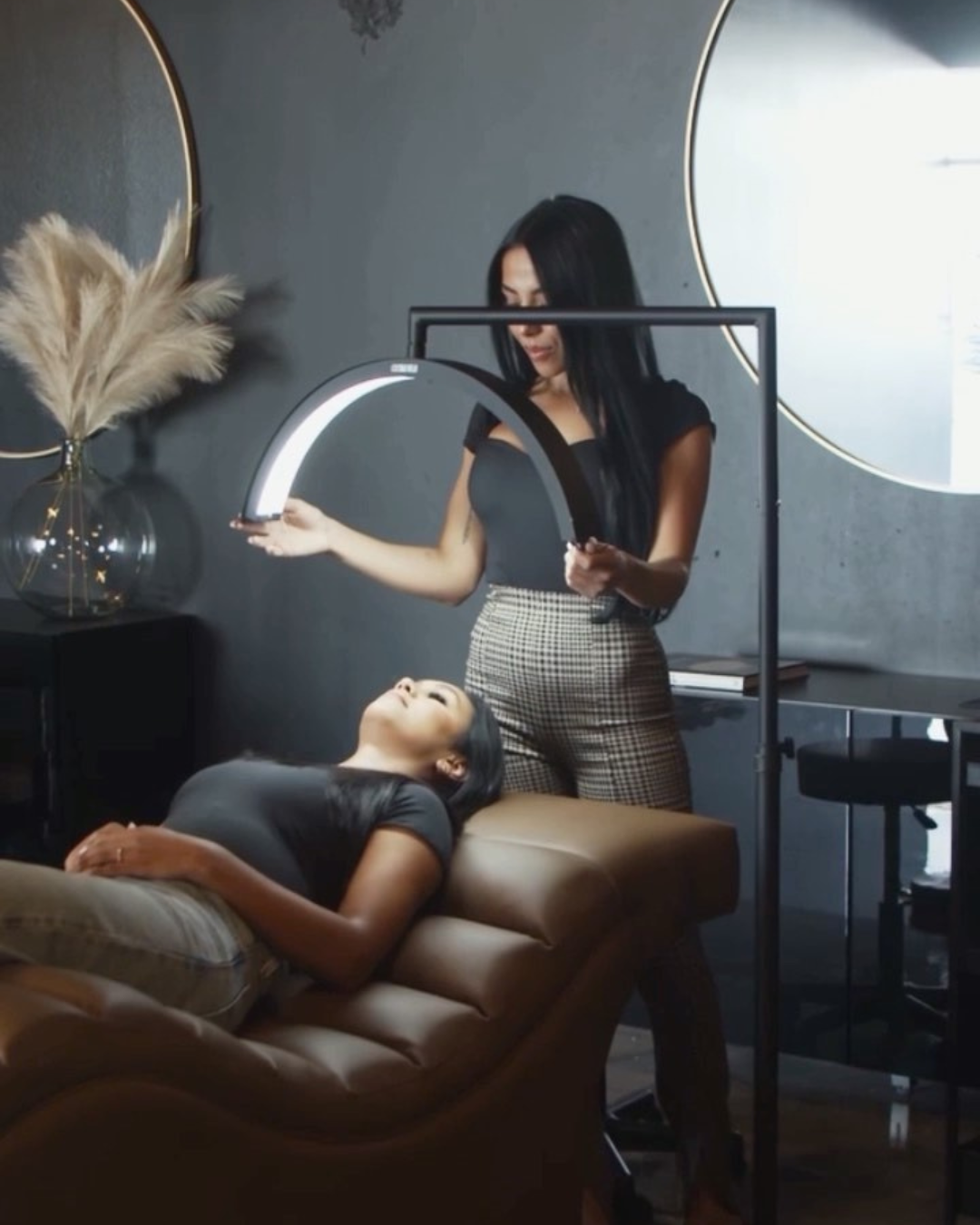
Task lighting for services: You need color-accurate, shadow-free lighting for extractions, skin analysis, and precision work. A magnifying lamp with adjustable arm (5-diopter minimum) positioned at the head of your bed is essential for detailed work. The color temperature should be closer to daylight (5000K) for accurate skin assessment — very different from your ambient light.
The layered approach: The most effective esthetician suites use dim, warm ambient light during consultation and arrival, then transition to appropriate task lighting during treatment. A dimmable smart switch or separate circuits for ambient vs. task lighting gives you this flexibility.
Accent lighting: LED strip lighting under shelving, behind a mirror, or beneath your treatment bed adds depth and creates a luxurious glow that photographs beautifully. This is a $30–$80 investment that creates a significant visual impact.
Layout Strategy for Small Suites
The typical salon suite is 100–150 square feet — a space that requires intentional furniture placement to feel both functional and beautiful.
Bed positioning: Your treatment bed should have clearance for you to work from the head, both sides, and foot. Position it so you can complete a full facial without obstruction from any angle. Avoid pushing it against a wall unless the room truly requires it.
Steamer and trolley placement: Position these on the side you primarily work from, close enough that you can reach without stretching or leaving the client's side.
The consultation moment: A small chair and compact side table near the door or window creates a natural arrival zone separate from the treatment surface. Even 4–5 feet of intentional separation between where clients first sit and where they're eventually treated creates a sense of ritual and care.
Storage positioning: Keep closed storage (cabinet or armoire) where it anchors the room rather than blocking movement. Open product shelving works best on a wall the client can see from the consultation area — it creates a visual abundance that feels curated.
The Sensory Environment
Estheticians who build loyal, high-value clientele understand that a facial is a full sensory experience. Furniture and lighting are the visible layer. The sensory layer — often invisible but deeply felt — includes:
Scent: A high-quality diffuser with a consistent, signature scent is one of the most powerful brand elements in a suite. Clients who associate a specific scent with your space will recall it every time they smell something similar. This is branding that requires no screen. Avoid synthetic air sprays — they read as cover-up. Choose a quality essential oil blend that complements your brand direction.
Sound: Even simple background sound design — soft ambient music, nature sounds, or curated playlists — shifts the room from neutral to intentional. Use a small Bluetooth speaker positioned away from the client's direct ear line.
Temperature: Clients who are lying still under a sheet for 75 minutes feel temperature change significantly. A small space heater for cold months and a fan for warm months, both unobtrusive, are meaningful comfort investments.
Esthetician Suite Setup Budget Guide
| Item | Budget Range | Smart Investment Range |
|---|---|---|
| Esthetic treatment bed | $600–$2,500 | $1,200–$2,000 |
| Work stool with back support | $100–$400 | $200–$350 |
| Service trolley | $100–$500 | $200–$400 |
| Facial steamer | $150–$600 | $250–$450 |
| Wall shelving (open display) | $80–$400 | $150–$300 |
| Enclosed cabinet/storage | $200–$800 | $350–$600 |
| Lighting upgrades (task + ambient) | $150–$600 | $300–$500 |
| Consultation chair + side table | $150–$600 | $250–$450 |
| Decor and finishing | $150–$600 | $250–$400 |
| Total | $1,680–$7,000 | $3,150–$5,450 |
Your esthetic bed is the non-negotiable investment. Everything else can be added and refined over time — the bed defines the room and affects every service, every client, every photo.
Esthetician Suite Setup Checklist
Before opening:
- [ ] Treatment bed positioned with full perimeter access
- [ ] Electric height adjustment tested across full range
- [ ] Work stool adjusted to working height
- [ ] Service trolley stocked and organized
- [ ] Facial steamer filled, tested, and positioned
- [ ] Open shelving organized with retail products
- [ ] Enclosed storage stocked and organized
- [ ] Ambient lighting: warm, dimmable, tested
- [ ] Task/magnifying lamp installed and positioned
- [ ] Scent diffuser running, blend selected
- [ ] Consultation seating area set up
- [ ] Suite photographed for marketing — approved
For each session:
- [ ] Treatment surface sanitized and fresh paper/barrier applied
- [ ] Products and tools for this treatment set up on trolley
- [ ] Steamer filled and ready
- [ ] Ambient lighting adjusted to warm setting
- [ ] Sound environment set
- [ ] Consultation area clean and welcoming
Frequently Asked Questions
What furniture do I need for an esthetician suite?
The essentials are your treatment bed, a work stool, a service trolley, a facial steamer, adequate task lighting, wall shelving or storage, and at least one consultation seating piece. The esthetic bed is the single most important purchase — it defines the room's quality and affects every service you provide.
How do I make a small esthetician suite feel like a spa?
Warm, dimmable lighting is the single highest-impact change. Follow it with a quality scent diffuser, warm color palette on walls, premium upholstery on your treatment bed, and a small consultation area separated from the treatment surface. These elements together create a sensory environment that reads as spa without requiring spa square footage.
What color should I paint my esthetician suite?
Warm whites, sage green, dusty blush, and warm neutrals consistently perform best for esthetic rooms — they're calming, spa-adjacent, and photograph beautifully. Avoid cool greys and stark whites without warm accents, as they can read as clinical. The most important thing is committing to one palette and executing it consistently through furniture, textiles, and accessories.
How much does it cost to set up an esthetician suite?
A professional esthetician suite setup typically costs between $3,000 and $5,500, with the treatment bed representing the largest single investment ($1,200–$2,000 for a quality piece). The investment pays back quickly — a well-designed suite enables premium pricing and improves client retention meaningfully.
Ready to find the treatment bed that anchors your esthetician suite? Explore our esthetic bed collection →
Building a complete suite? See everything we make for the modern esthetician: Esthetician Room Furniture →

Written by Courtney Buhler