

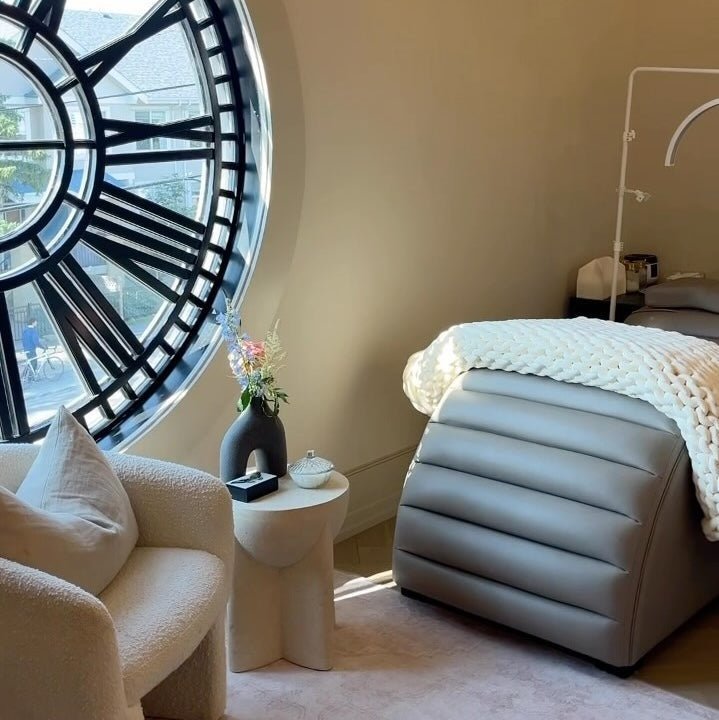
Brow Room Setup: Why Your Current Bed Is Making Precision Work Harder Than It Needs to Be
Brow Room Setup: Why Your Current Bed Is Making Precision Work Harder Than It Needs to Be
You've been doing brow work for years. Your hand is steady. Your design eye is sharp. Your clients trust you. But your lower back is telling a different story.
Most brow artists don't start with a bed designed for brow work. They inherit what they have — a massage table from the local supplier, a flat bed from an import site, something cheap that was supposed to be temporary but somehow became permanent. And because it was inexpensive, it feels practical. It must be fine, right?
It's not fine. It's just invisible.
Every time you lean in to do detail work at the head of that table, your spine is doing work it wasn't designed to do. Every appointment is a small injury. Every week compounds it. And by the time you realize the problem is structural — not just "a bad back day" — you're already three years into using furniture that fights your body instead of supporting it.
This is the brow room setup problem nobody talks about: the bed you're using wasn't designed for someone working at the head. It was designed for a massage therapist standing alongside it.
The Massage Table Problem
Here's the issue with a standard massage table, laid out plainly.
A massage table is built for a therapist who stands on the side of the table and works on the client's body from that position. The table has four legs, placed at the corners to create a stable base for side-access work. This means the legs are directly underneath the head and foot of the table.
Now imagine your setup. You're sitting at the head of the table, right where the client's head is. Your knees go under the table base. The table leg is in your way. So you twist your pelvis, angle your legs awkwardly to the side, or sit too far back and extend your arm unnaturally to reach your client. You're working in a position that would make an ergonomist wince.
This isn't something you notice on day one. But over months and years, this twisted posture compounds. Your lumbar spine is being loaded unevenly. Your shoulders are working in a strained position. Your neck is extended because you're reaching. By the time you feel it — usually as chronic lower back pain or shoulder tension — the habit is years old and changing feels impossible.
And it is impossible, as long as you're using a massage table.
The second problem: massage tables require a workaround aesthetic. A bare massage table doesn't look like the brow room of an artist who cares about the client experience. So you add a topper, then a bolster, then some cushions. You layer sheets on top. You've created a complicated assembly that needs to be laundered after every client. The setup looks busy. It feels temporary. And it still doesn't function the way a proper brow bed would.
The third problem: the base itself is just foam on plywood. After a year or two, the foam compresses. The plywood doesn't breathe. By year three, your clients are lying on something that feels more like a board than a bed. They're less comfortable. They move more. Longer appointments are harder on them. And you're noticing it in their reviews.
The Import Bed Problem
You might have skipped the massage table entirely and gone straight to an import bed — a low-cost spa bed from overseas. This felt like an upgrade. More professional. Better aesthetics. Probably cost you two to three thousand dollars. Seemed reasonable.
Here's what you actually paid for: a bed that costs $500 to manufacture, plus the entire supply chain to get it to you. Ocean freight. Port fees. Warehousing. A distributor's markup. Local shipping. By the time you received it, you paid four to six times what the product itself cost.
And the product itself? Still plywood and foam. Still compressed after a few years. Still not designed specifically for how you work.
The frame is flimsy compared to what it looks like. The cushioning is generic. The suspension is basic. It works, but barely. And because it came from overseas, if something breaks, you're either ordering another one or fixing it yourself.
Meanwhile, you've committed your clients to lying on that specific bed, with that specific aesthetic, in that specific configuration. You're stuck with whatever colors they offered in stock. If your room changes, the bed doesn't adapt. You're locked into someone else's design choices.
What Plush + Oak Actually Solves
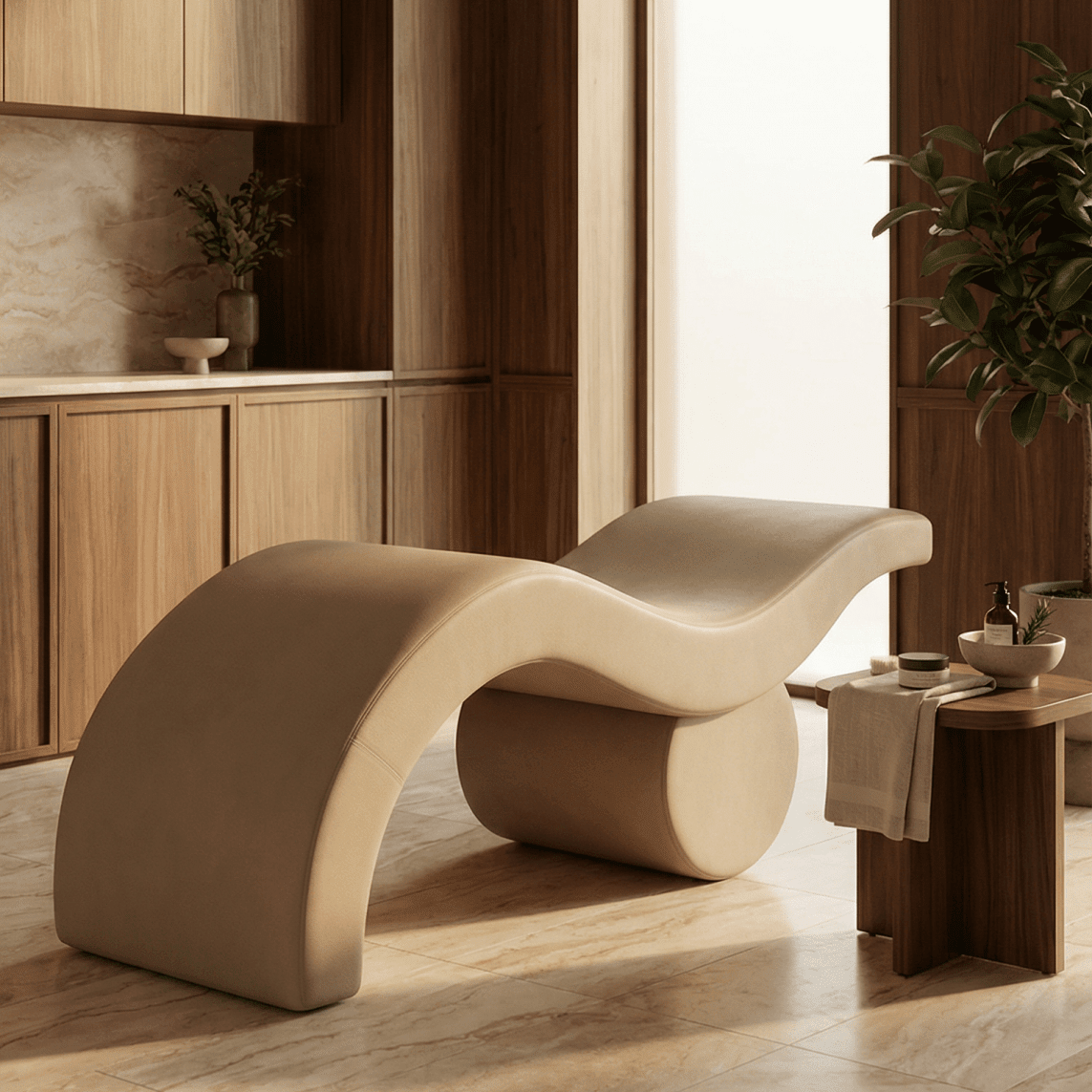
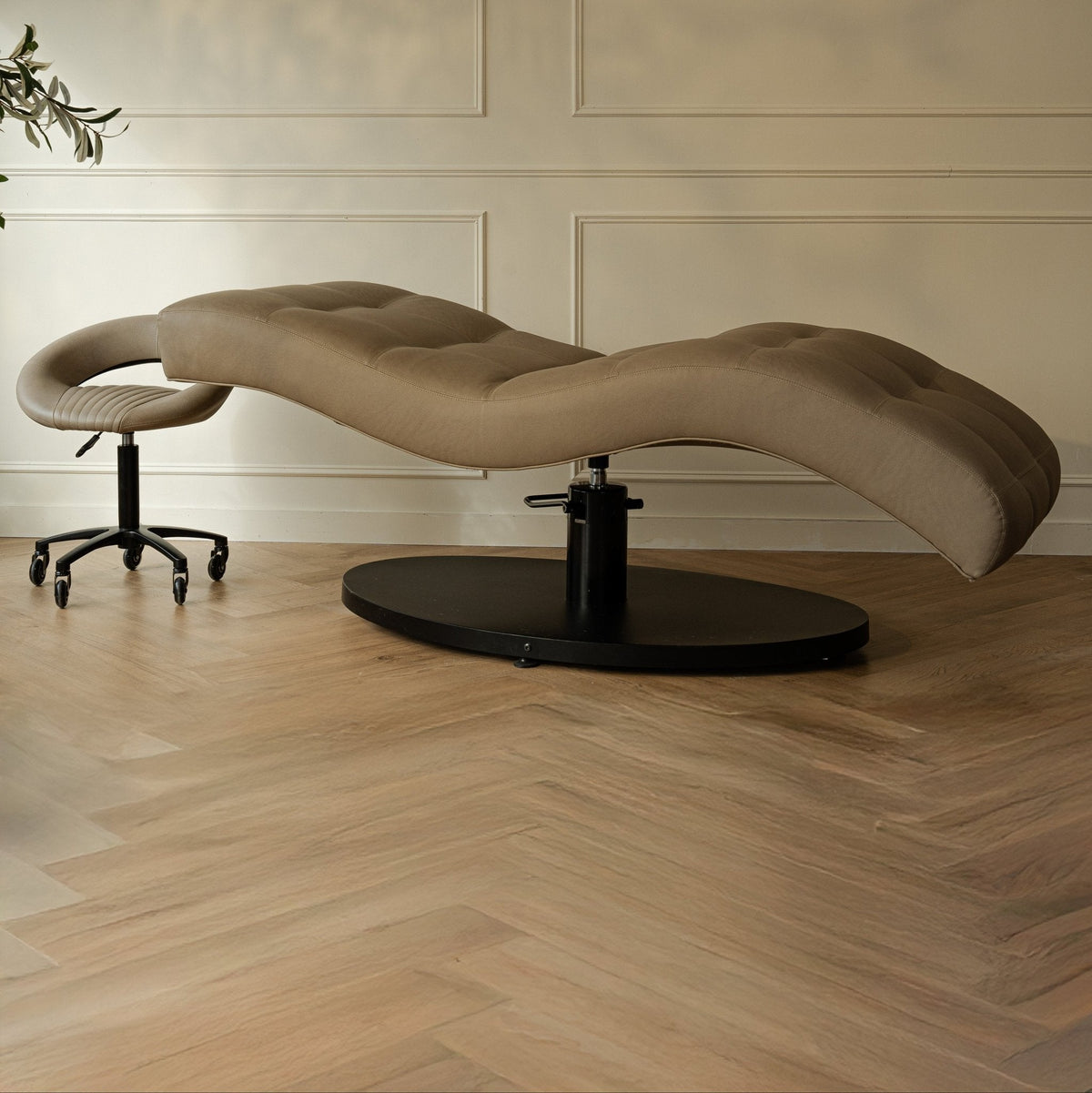
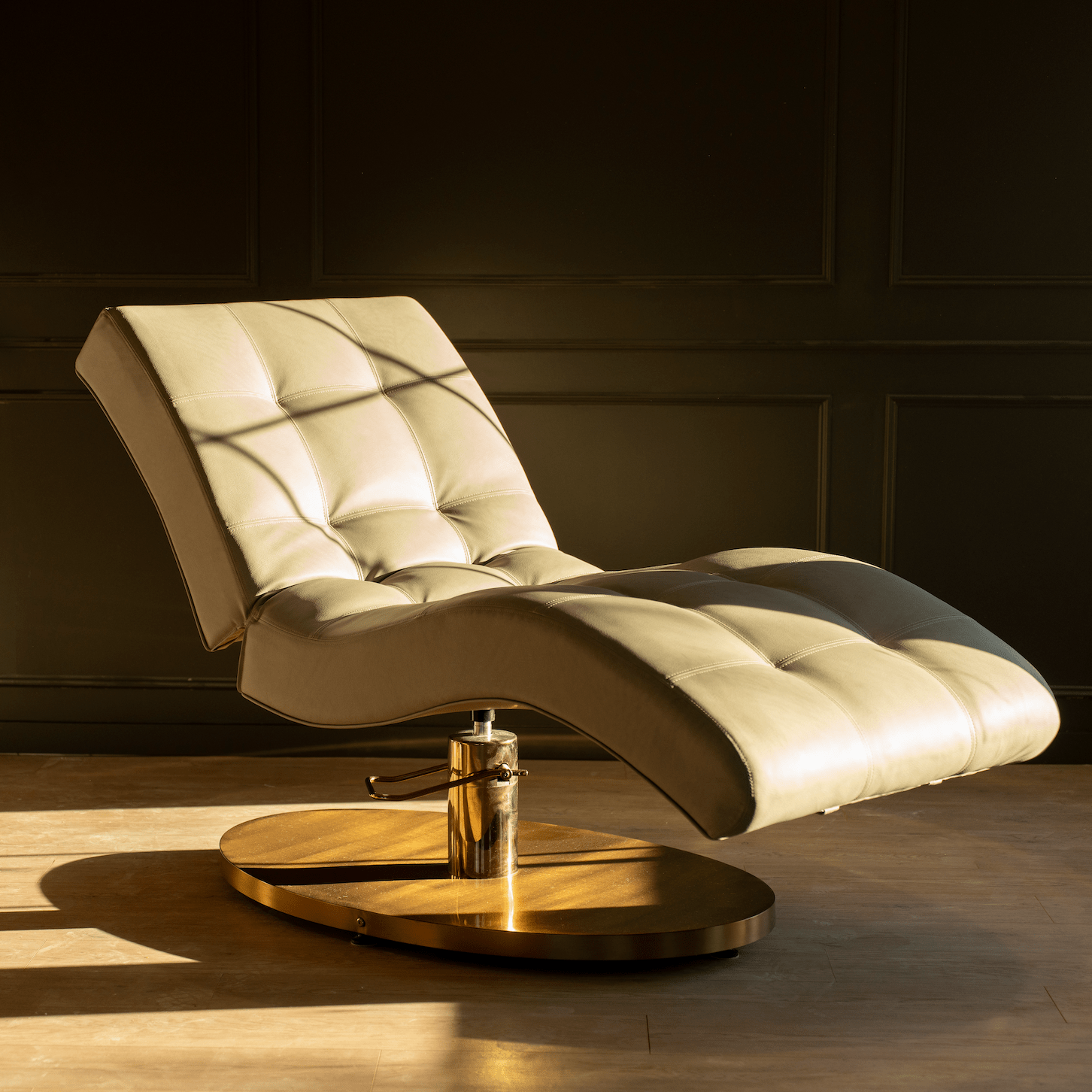
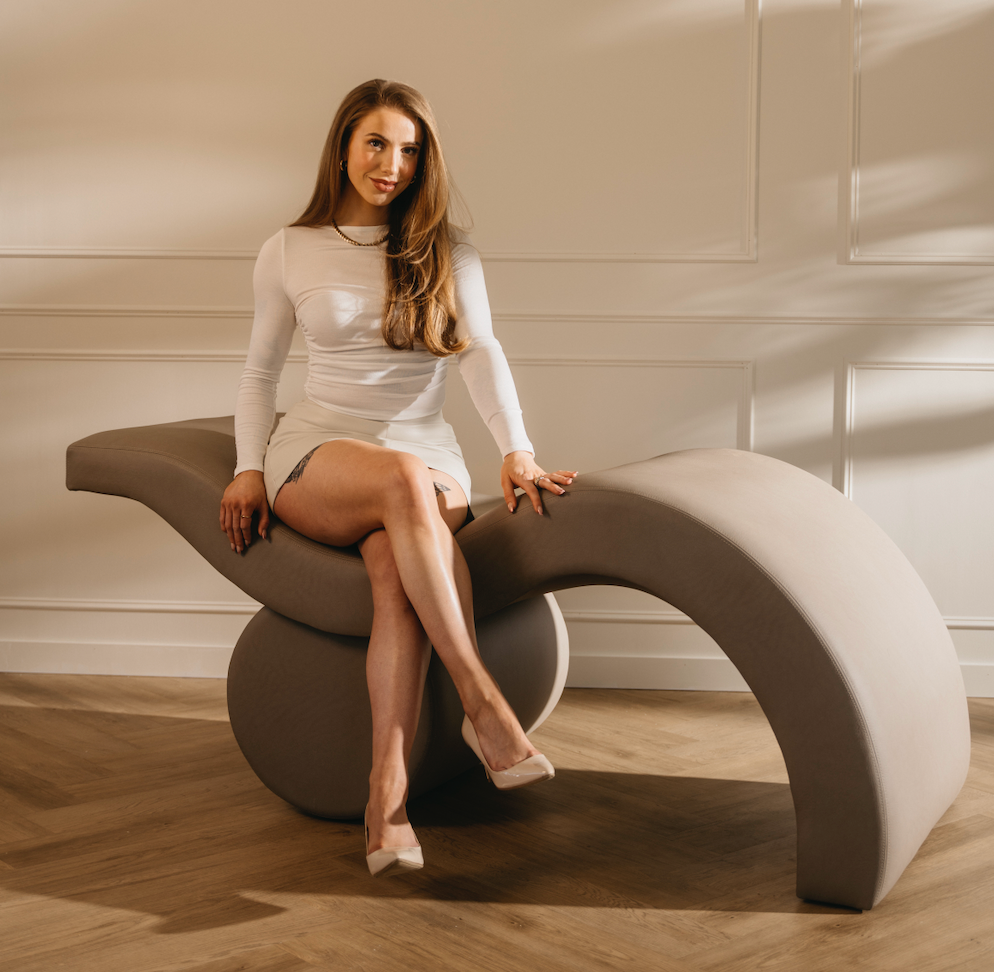
The Plush + Oak Edda Cloud and Brynn are the answer to every one of these problems. Here's how they work differently.
First: the leg clearance. Plush + Oak beds are designed specifically for artists working at the head. The leg placement is open. There's no table base in your way. You can sit comfortably right where you need to be — at the head of the bed, at the perfect angle and height for detailed brow work. Your pelvis isn't twisted. Your spine isn't compensating. Your body is in a neutral position for the entire appointment.
This alone changes everything.
Second: the ergonomic anti-gravity curve. The Edda and Brynn have deep ergonomic curves built directly into the bed structure. This curve cradles your client's face and head at exactly the right angle for close precision work. The client's head is positioned. The face is accessible. The positioning does the work — you don't need toppers or bolsters or any of the workarounds. The bed is designed to be the solution, not the problem.
Your client lies down and is immediately in the right position. And because the positioning is built into the frame, it doesn't compress over time. Year three feels like year one.
Third: the suspension system. Under every Plush + Oak bed is a full tensile webbed suspension — the same engineering as a high-end sofa. The foam isn't sitting on plywood. It's suspended on a woven web of tensile material that flexes and breathes. When your client lies down, they're not sinking into foam crushed against a hard base. They're being held in air.
Your clients feel the difference immediately. They ask what they're lying on. The bed feels springy, responsive, alive. It feels like something designed with their comfort in mind — because it was.
This construction also means the bed doesn't break down. The foam stays supportive. After five years, it still feels like when it arrived.
Fourth: no laundry. Every Plush + Oak bed is easy to wipe down. No sheets. No removal. No washing. No drying. No folding. You spend five seconds wiping the bed between clients. You've eliminated an entire time sink from your business.
Fifth: the customization. Because Plush + Oak makes every bed to order, you choose the exact color and finish. You're not picking from three stock options. Your bed tells your brand story. It's a design choice, not a default. If your room evolves, if your aesthetic shifts, you can order the next one in a different color. You're never stuck.
Sixth: the value. You're paying for the bed and shipping. Not the supply chain. Not the warehousing. Not four years of inventory sitting in a port. The made-to-order model means you're buying a premium product without the premium markup.
And because these beds are built to last, the cost per year drops dramatically. A Plush + Oak bed lasts seven years, minimum. A cheap import lasts three. The real cost is lower.
The Numbers
98% of Plush + Oak customers said both they and their clients are much more comfortable.
93% said their revenue increased after upgrading.
87% said it helped increase client attraction.
94% said it helped with client retention.
81% saw more positive reviews.
These aren't small shifts. These are the results of working on furniture that actually supports your body and impresses your clients. The business impact is real.
A brow room setup isn't just about the bed. It's about the entire ecosystem — your stool, your lighting, your storage, your aesthetic. But the bed is the foundation. It's where your client spends the entire appointment. It's what your clients photograph. It's what determines whether they're comfortable enough to spend ninety minutes still while you do precision work.
If that foundation is a massage table or an import bed, you're fighting physics and wasting money on a workaround that never quite works.
If it's a Plush + Oak Edda or Brynn, your client is cradled in the right position. Your body isn't twisted. The bed looks like something designed intentionally. The suspension feels like luxury. And you're running a room that's not just beautiful but actually functional for how you work.
Your back will thank you. Your clients will notice. Your business will show it.
If you're ready to set up your brow room the right way, visit plushandoak.com to explore the full lineup. The Edda Cloud and Brynn are the standard for precision brow work. Either one will transform how you work and how your clients experience your service.
Need height Adjustment? Try The Vera! 
The bed you're using now might feel like it's working. It's not. You've just gotten used to working around it.
Ready to choose the treatment bed that anchors your brow studio? Explore our brow bed collection →
See everything we make for brow studios: Brow Room Furniture →

Written by Courtney Buhler