


Article: What is a Brow Bed (And Why Most Brow Artists Are Working On the Wrong One)
What is a Brow Bed (And Why Most Brow Artists Are Working On the Wrong One)
What Is a Brow Bed (And Why Most Brow Artists Are Working on the Wrong One)
Most brow artists don't start their careers thinking about what bed they'll use. You learn the craft first. You build a clientele. You figure out the business side. And somewhere in that progression, you realize you need furniture.
At that point, you probably don't buy a "brow bed" specifically. You buy whatever's available, whatever fits the budget, whatever seems to work for now. Maybe it's a massage table. Maybe it's a flat bed from an online retailer. Maybe it's a hand-me-down from another artist. And if it functions, you keep using it.
That's how most brow artists end up on the wrong bed — not because they made a bad choice, but because they never knew a better option existed.
So what is a brow bed? And what makes it different from what you probably have now?
The Definition
A brow bed is furniture specifically engineered for artists who work at the head of the bed doing close, detail-oriented precision work on the client's face.
That's the core function. Everything else — the design, the construction, the materials, the ergonomic features — flows from that one requirement: the bed must enable an artist to sit at the head and do detailed work comfortably for 60, 90, or even 120 minutes without the client or the artist experiencing pain or discomfort.
A massage table isn't a brow bed. A massage table is designed for a therapist standing on the side. A generic flat bed isn't a brow bed — it's just plywood and foam with no thought given to how it will actually be used. An import bed isn't a brow bed — it's a generic spa bed that happens to be inexpensive.
A brow bed is something built specifically for how you work.

What A Brow Bed Actually Needs
If you're going to do precision work at the head of a bed, the bed has to solve for several things simultaneously.
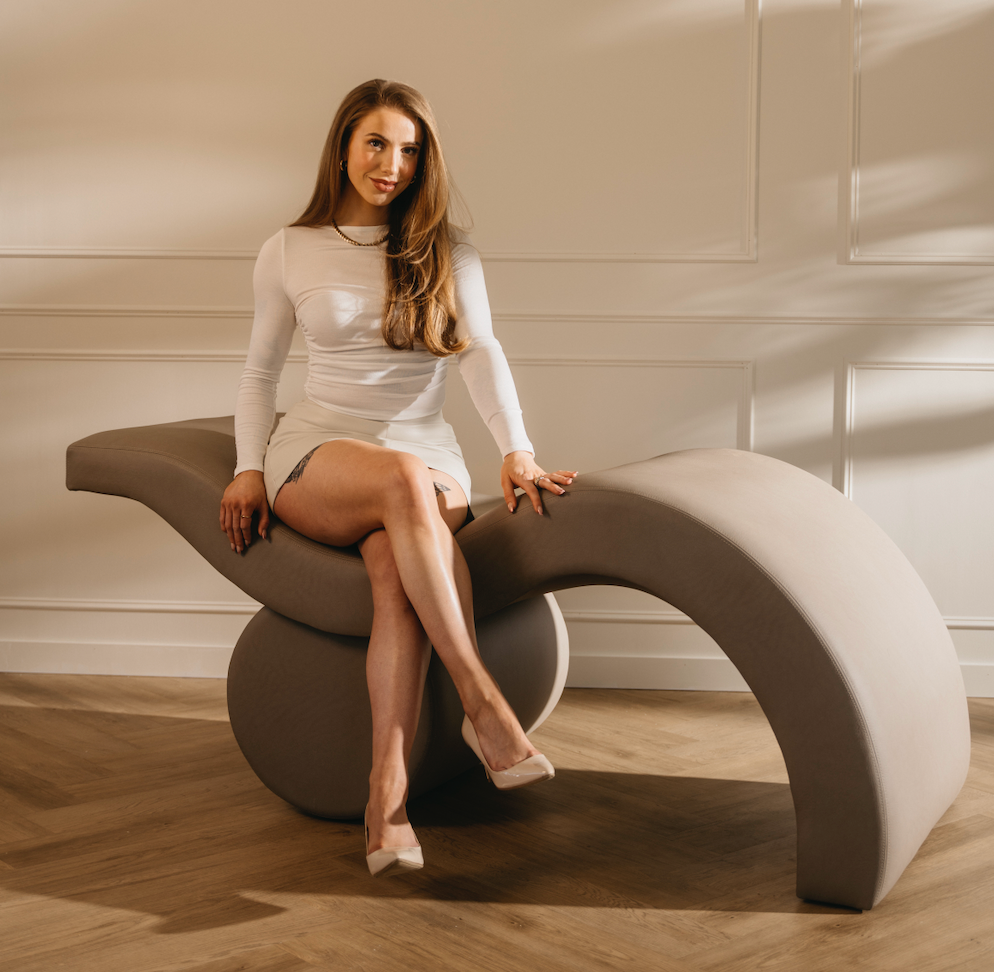
First: leg clearance. You need to be able to sit at the head of the bed with your knees underneath the bed structure without your legs hitting the table base. This sounds basic, but most furniture on the market isn't built this way. Massage tables have legs at the corners. Flat beds have plywood bases that extend to the floor. Both force you to sit awkwardly, twist your pelvis, or extend your arms at unnatural angles.
A brow bed has open leg space. You can sit at the head with your body in a neutral position. This isn't a luxury. It's the difference between working in a sustainable position and destroying your back over time.
Second: client positioning that works for precision work. When a client lies down on the bed, they need to be in the right position for you to work on their face. Not just close enough. The right position. This means the head needs to be accessible, the face needs to be still, and the positioning needs to stay consistent throughout a 90-minute appointment.
Generic beds are flat. Flat beds require workarounds. You add pillows. You adjust. You prop. By the middle of the appointment, your client has shifted. You're working at a different angle than you started. Your arms are tired. The precision work gets harder as the appointment goes on.
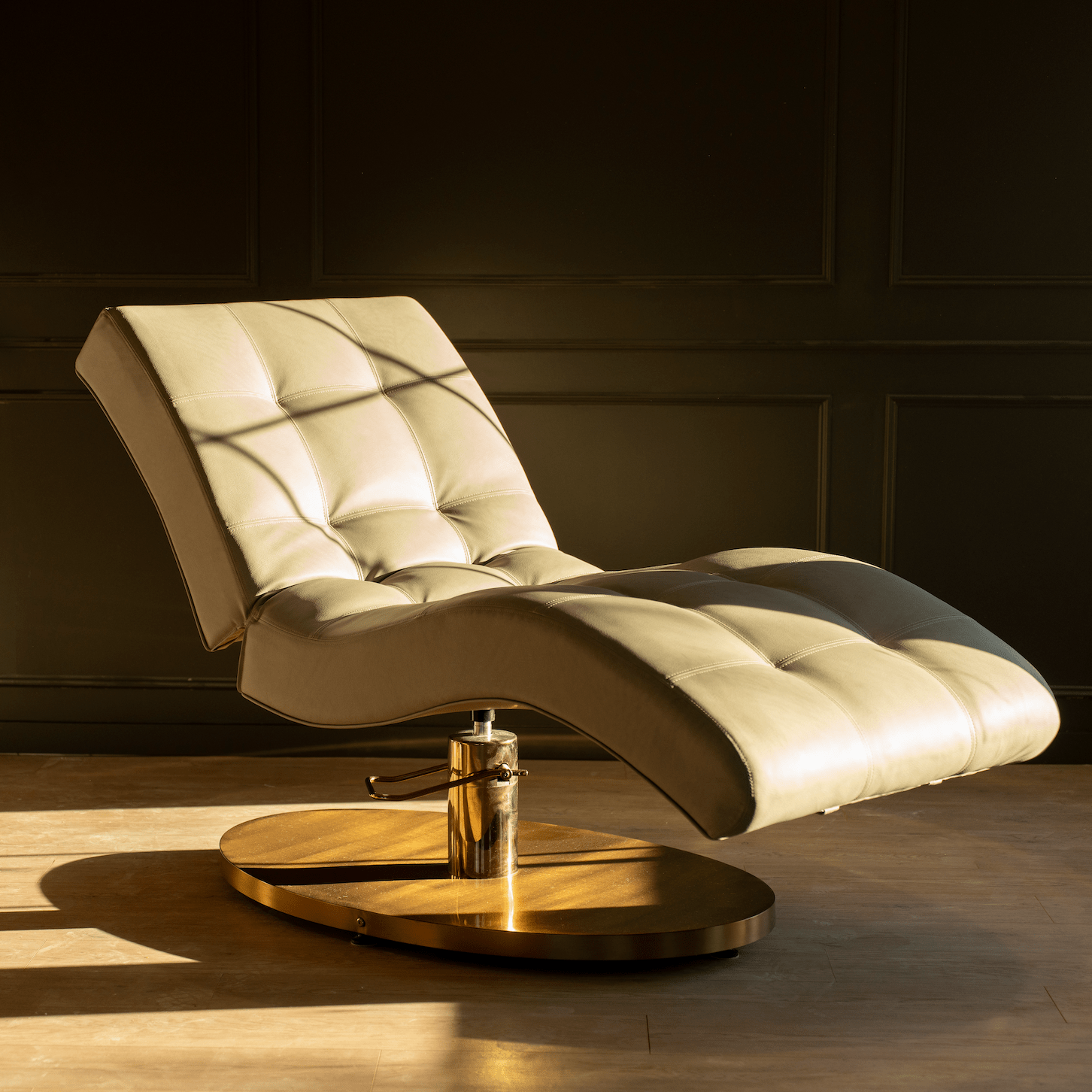
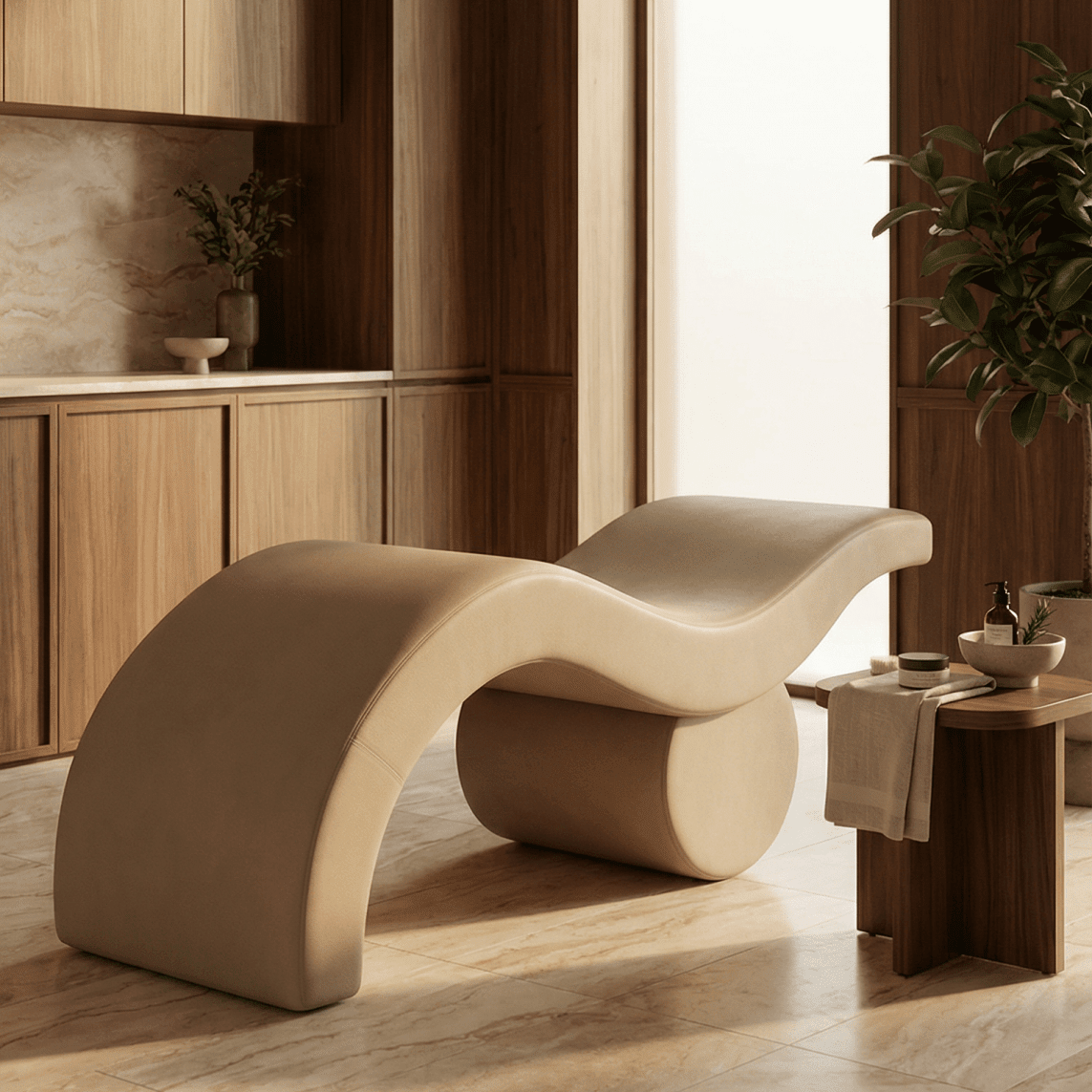
A brow bed solves this with an ergonomic anti-gravity curve. The curve is built into the bed's structure. When a client lies down, they're cradled in the right position immediately. The curve supports them throughout the appointment. The positioning is passive — the client stays where they need to be without conscious effort. The bed does the work.
Third: comfort deep enough for a long appointment. Ninety minutes is a long time to lie still. If the bed is uncomfortable, your clients will shift. They'll fidget. They'll be tense. The appointment will feel longer to them. They won't book again.
Most beds are built with a few inches of foam on a hard base. The foam compresses. Over the course of an appointment, the client is essentially sinking toward the hard base. By minute 60, the experience degrades. By minute 90, they're uncomfortable.
A brow bed is built with premium cushioning — typically 4+ inches of high-quality foam. But more importantly, the foam is suspended, not compressed. Under every Plush + Oak bed is a tensile webbed suspension system. The foam floats on a woven web, not a plywood base. The entire system flexes and responds to the client's body weight. The bed feels springy, supportive, and luxurious.
After 90 minutes, your client still feels cradled. They don't feel like they've been lying on a board.
Fourth: longevity and maintenance that actually works. A brow bed needs to survive years of daily use without degrading. A bed that loses cushioning after a year or two isn't viable for a working artist. You need furniture that stays comfortable and continues to function.
Generic beds break down because foam sitting on plywood compresses and doesn't recover. After a few years, it flattens. The bed feels like a board. You're either replacing it or fighting through it.
Plush + Oak beds are built to last because the suspension system means the foam doesn't compress against a hard surface. The tension in the webbing supports the structure. The foam stays responsive. Year three feels like year one.
And maintenance needs to be realistic. No sheets. No laundry. You wipe it down between clients and move on. Not because it's cute marketing language, but because a working artist doesn't have time to wash and dry linens after every appointment.
Fifth: aesthetics that reinforce your brand. Your clients photograph your space. They post on Instagram. They tell other people what your room looks like. Your bed is the centerpiece. It defines the aesthetic. A mismatched massage table with toppers and sheets doesn't communicate professionalism. A generic bed in a generic color doesn't communicate intentionality.
A brow bed should look like a deliberate design choice. It should be beautiful. It should match your brand. And because you're choosing it specifically for brow work, it should tell clients that you've thought about their experience.
What Makes a Good Brow Bed

Why Most Brow Artists Are On The Wrong Bed
You're on the wrong bed because you didn't know there was a right one.
If you're using a massage table, you're working in a position that strains your back. You're adding toppers and sheets. You're creating maintenance work. Your clients are shifting position mid-appointment. Your room doesn't look intentional.
If you're using a generic flat bed, your clients are comfortable for the first hour and uncomfortable by minute 75. The bed doesn't position them correctly, so you're working at slightly off angles all day. Your room looks like a bedroom, not a professional space.
If you're using an import bed, you're paying for 80% supply chain and 20% product. The cushioning is basic. The suspension doesn't exist. It functions, but it doesn't excel. And if something breaks, you're stuck.
You're on the wrong bed not because you're a bad businessperson, but because the right bed wasn't in your consideration set. You didn't know to look for one.
The Business Case
Here's why this matters beyond ergonomics and comfort.
93% of Plush + Oak customers saw revenue increase after upgrading to a brow-specific bed. The average increase was 10-25%, with some seeing as much as 100%.
Why? Because clients feel the difference. They're more comfortable. They relax more. They book longer appointments. They come back. They refer friends.
87% saw increased client attraction. You're photographing a beautiful, intentional space. Clients see professionalism in every detail.
94% saw improved client retention. Comfort converts to loyalty.
81% saw more positive reviews. Clients mention the bed. They notice it. They appreciate it.
These aren't coincidences. They're the result of investing in furniture designed specifically for how you work.

Which Plush + Oak Bed Is Right For You
If you're doing precision brow work and you want the ideal bed, you have two core options.
The Edda Cloud and the Brynn are both static beds with deep ergonomic anti-gravity curves. These are the standard for precision brow work. You sit, the client lies down, and the positioning does the work. No adjustments needed. The suspension system, the curve, the cushioning — all of it is optimized for exactly what you do.
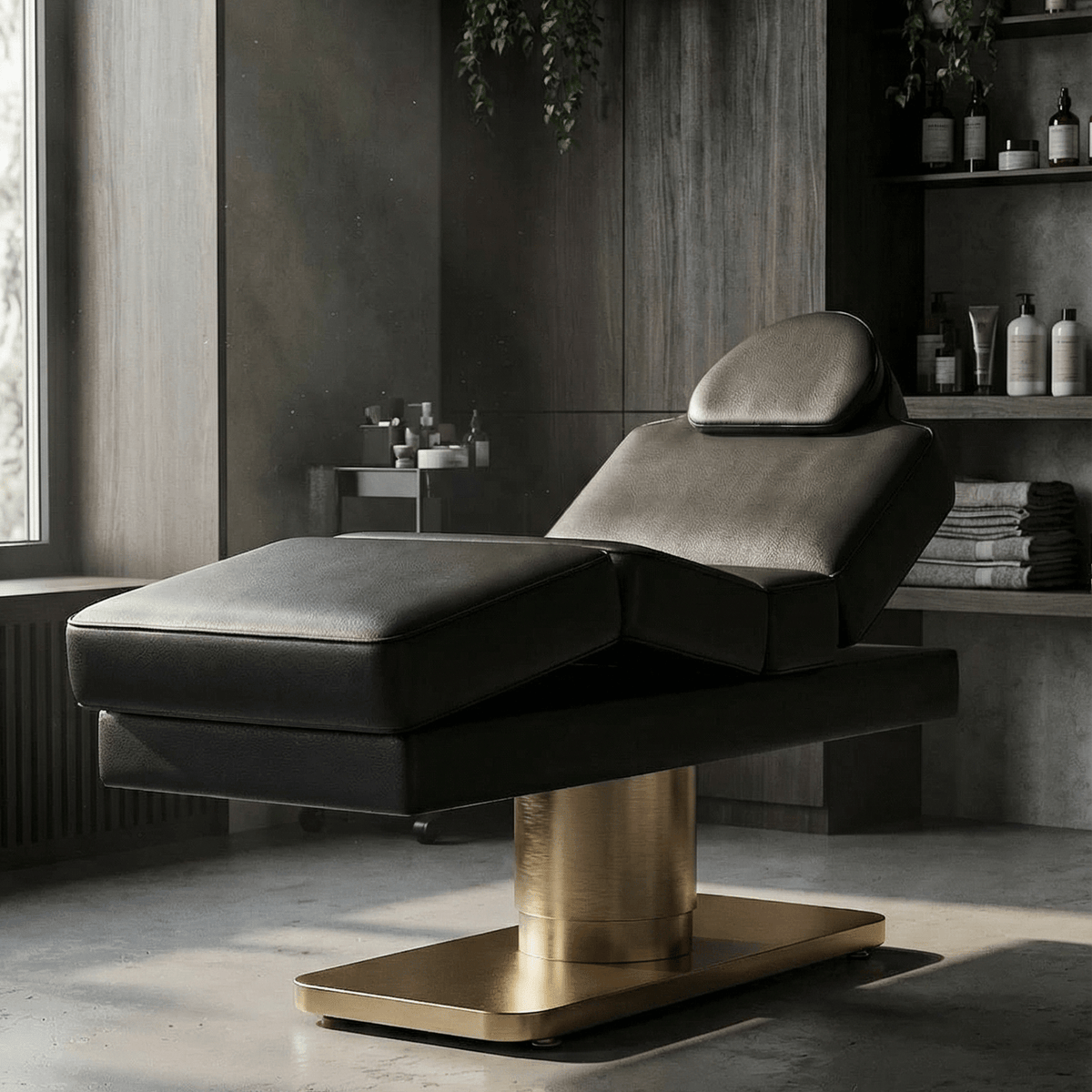
If you want height adjustment without cords or mechanical complexity, the Vera 360 offers smooth hydraulic adjustment. You lock in the height that works for your ergonomics, then work. If some clients need to be positioned slightly higher or lower, you can adjust between appointments.
If you occasionally need to recline your client to a seated position — for consultations or certain facial treatments — the Vera LOFT adds a clicker-recliner mechanism that takes the client from flat all the way to 90 degrees upright.
For most brow artists doing detail work on clients lying flat, the Edda or Brynn is the answer. The design is sophisticated because it doesn't need to be complicated. It just works.
The Takeaway
A brow bed isn't a luxury. It's the difference between working sustainably and gradually accumulating injuries. It's the difference between clients who come back and clients who tolerate a single appointment. It's the difference between a room that looks professional and a room that looks improvised.
If you're using a massage table or a generic bed, you're not saving money. You're spending it twice: once on the wrong furniture, and again in the form of physical pain, lost clients, and the cost of replacing it eventually anyway.
The right bed — a bed designed specifically for brow work — transforms both your experience and your clients' experience.
Visit plushandoak.com to explore the full collection. The Edda Cloud and Brynn are the standard for a reason. They're what thousands of successful brow artists use every day.
The bed you're using now might feel like it's working. But there's a better option. And it's not far away.

Ready to equip your brow studio with the right treatment table? Explore our brow bed collection →
See our full range of furniture for brow professionals: Brow Room Furniture →

Written by Courtney Buhler
%0AMost%20brow%20artists%20don't%20start%20their%20careers%20thinking%20about%20what%20bed%20they'll%20use.%20You%20learn%20the%20craft%20first.%20You%20build%20a%20c...)