

Article: PMU Studio Setup: The Furniture Decision That Separates $150 Artists from $300 Artists
PMU Studio Setup: The Furniture Decision That Separates $150 Artists from $300 Artists
PMU Studio Setup: The Furniture Decision That Separates $150 Artists from $300 Artists

A client is deciding between two PMU artists.
One charges $150 per appointment. The other charges $400.
Neither artist started with different skill levels. Both learned from quality instructors. Both practice proper technique. But one is booked out for months. The other is constantly prospecting for clients.
The difference isn't the artist's hands. It's the room.
The $150 artist is set up in a massage therapy space, part-time. There's a foam topper on a cheap bed. The lighting is standard overhead. The space feels temporary.
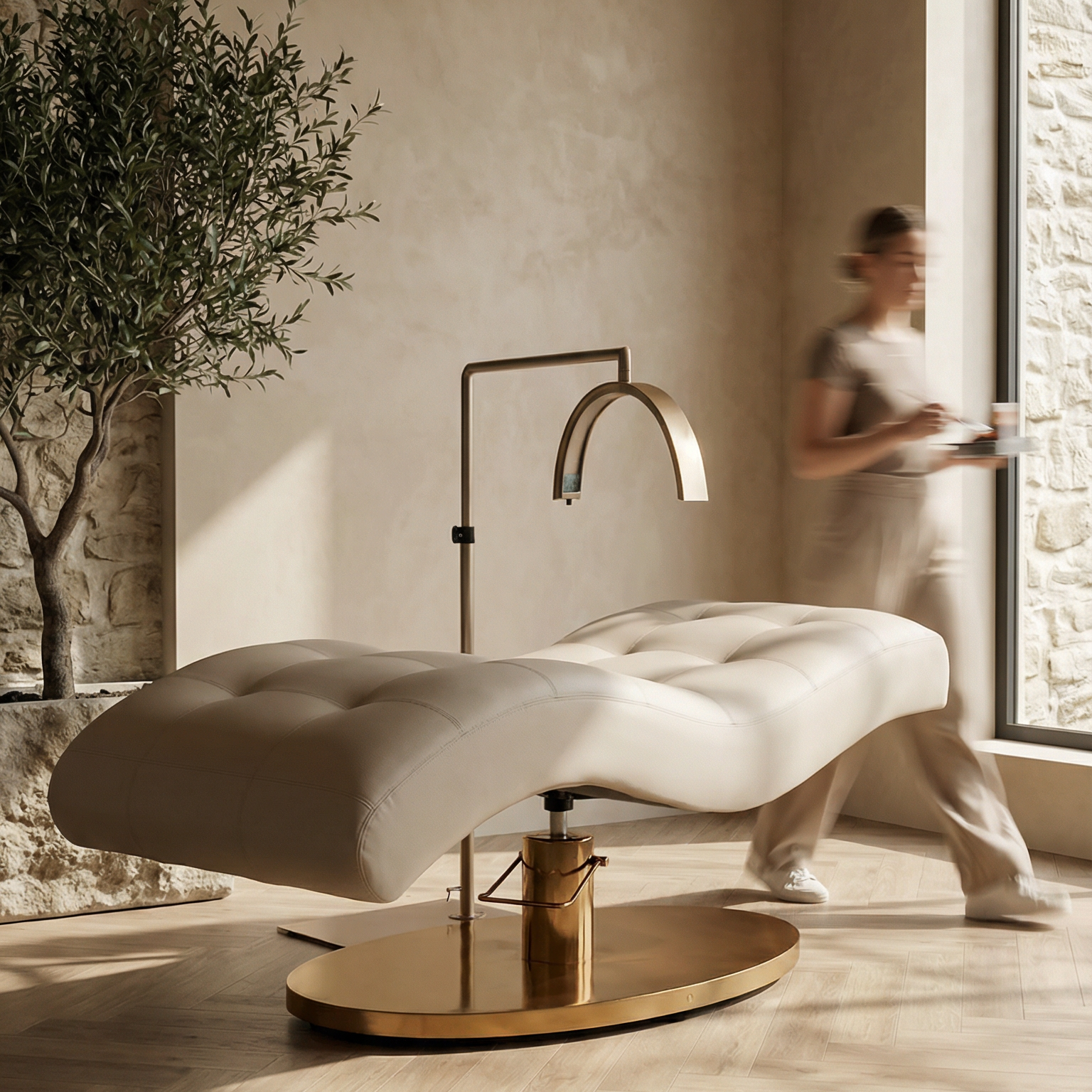
The $400 artist has invested in furniture and space that communicates exactly what the client is paying for. Beautiful lighting. A premium bed. Professional styling. The room tells a story about what this service is worth before the artist picks up a blade.
Your studio isn't just where you work. It's your pricing structure made physical.
Why Studio Environment Directly Affects Your Revenue
Permanent makeup is a premium-priced, high-commitment service. A client is paying $300-$900 for a procedure that will alter their face for 1-3 years. That's not a casual decision. And that client needs to feel confident that this investment is justified.
That confidence is built in three places: your portfolio, your certification, and your space.
You can't control whether someone happened to screenshot your best work. But you can absolutely control your space.
Here's what the data shows: 87% of PMU artists who invested in Plush + Oak furniture reported that it helped them attract clients. That stat doesn't exist because clients are furniture enthusiasts. It exists because premium clients make premium-priced decisions in premium spaces.
When a prospective client walks into your studio and sees serious furniture, professional design, high-end finishes, and a setup that looks expensive, they make an assumption: this artist takes her craft seriously. She's invested in her business. She's not doing this part-time from a garage.
That assumption is worth money.
What Premium PMU Studios Have In Common
Before we talk about which bed to get, let's talk about what separates a $150 studio from a $400 studio.

Serious Furniture, Not Repurposed Equipment
A $150 artist is using a massage table, a facial bed, or a mid-range import bed that was probably cheaper than three of her appointments would cost.
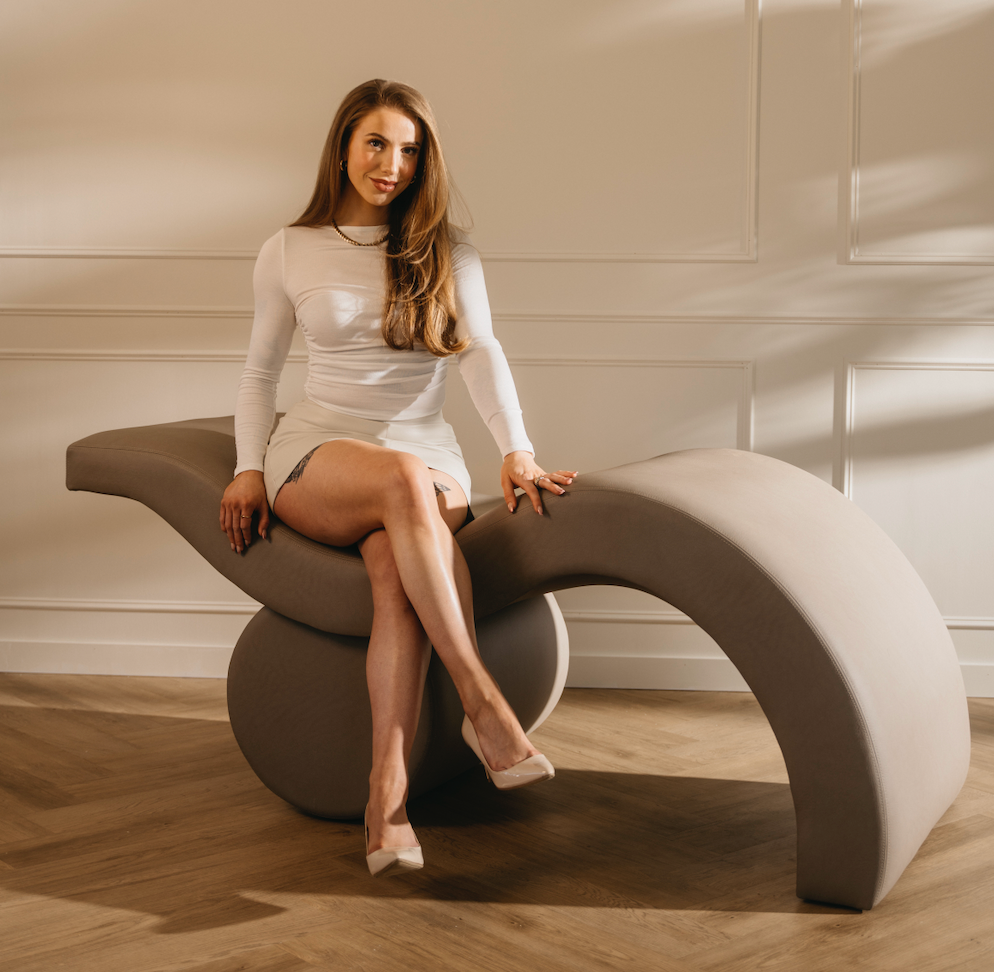
A $400 artist has invested in furniture designed specifically for PMU work. The bed is purpose-built. It's comfortable for 3-hour sessions. It's beautiful. It's a statement piece in the room.
Clients who pay premium prices notice the difference. They're not lying on the same equipment they'd use at a massage or facial appointment. They're lying on a bed that was chosen for PMU, which signals that this artist understands what her service requires.
A Room That Photographs Beautifully
Premium PMU artists are constantly showing their work on Instagram. Before-and-afters. Process photos. Detail shots.
A premium studio is in the background of every single one.
Clients who see those images are forming an impression about whether this artist's prices are justified. A beautiful, professional-looking studio supports premium pricing. A basement setup supports budget pricing. That's just how perception works.
The room tells the story before the artist does.
Client Comfort During Long Sessions
A PMU appointment lasts 2-3 hours. That's not a quick service. That's lying still for an extended period while someone works millimeters from your eyes and lips.
Client comfort directly affects the quality of the work. A client who is uncomfortable shifts slightly. That shift changes the angle of what the artist is doing. That's how mistakes happen.
A premium bed that cradles the client, supports their head and neck, and feels genuinely luxurious keeps the client still. It also makes them feel taken care of — which is part of what they're paying for.
A client who pays $400 for PMU expects a $400 experience. That includes the comfort of the bed.
How The Bed Justifies Premium Pricing
Here's the direct connection: a quality PMU bed helps you justify charging premium prices.
A client paying $300 instead of $80 is making a statement about value. She believes your service is worth the difference. She believes your skill is worth the difference. She believes the experience is worth the difference.
The studio needs to support that belief.
When she walks in and sees a premium bed in a custom color that matches your brand, she feels confirmed. This artist is serious. This artist invests in quality. This artist is worth what she's charging.
The bed becomes part of your pricing argument.

Which Plush + Oak Bed For Pmu Artists
Not every PMU artist needs the same bed. Here's how to choose:
FOR ARTISTS WHO PRIMARILY DO PMU (NOT FACIALS OR BODY WORK)
Start with The Edda Cloud or The Brynn.
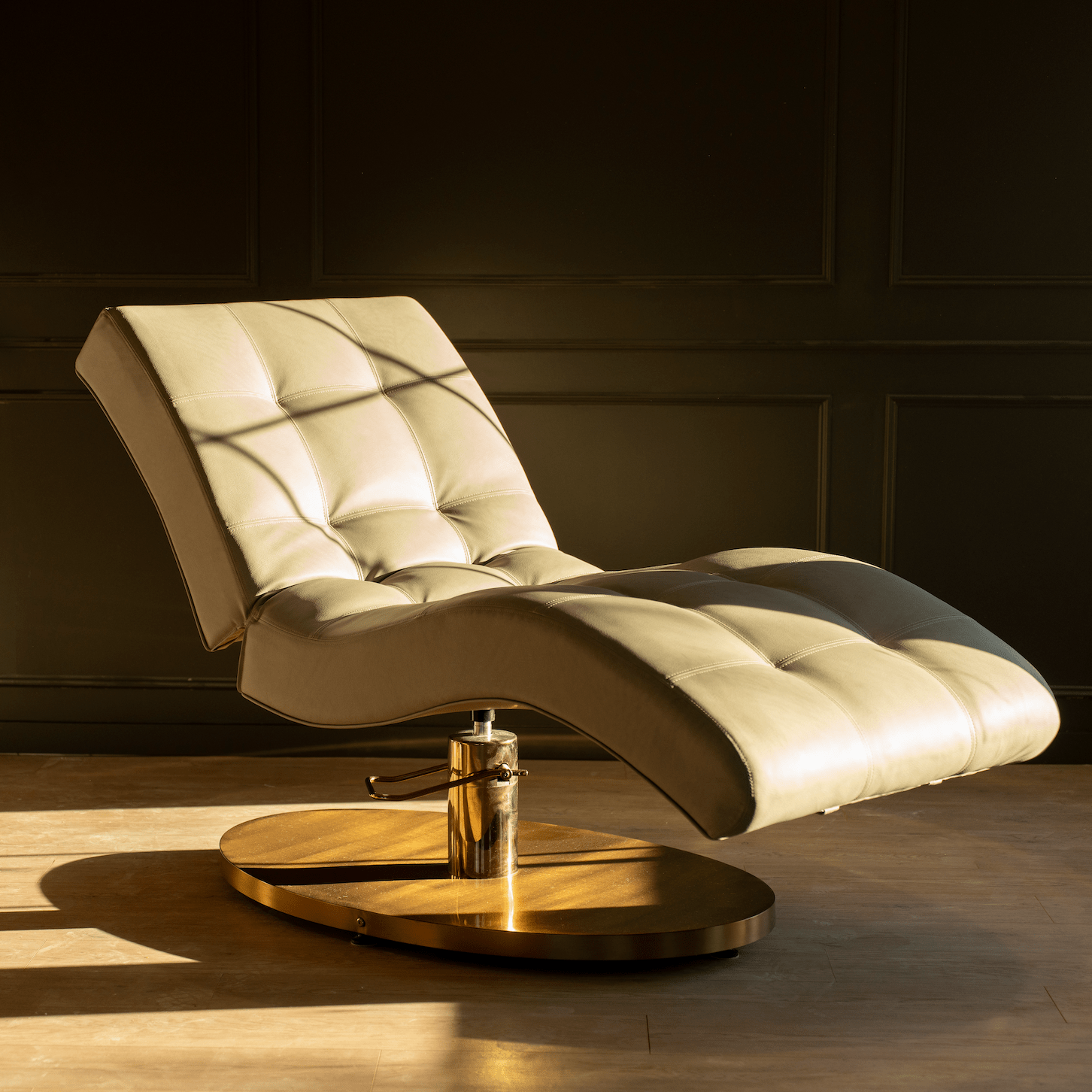
Both feature deep anti-gravity curves that cradle the client's head and face at the perfect angle for precision work. The curve does the positioning — there's no need to adjust the client or fiddle with pillows. She lies down. The bed holds her at the optimal angle for brow or lip PMU. She stays still.
The Edda Cloud has a deeper curve and is the bestseller for PMU artists. It feels cloud-like. It's luxurious. It communicates investment.
The Brynn has a slightly less pronounced curve and works beautifully for artists who prefer a little more versatility or have clients who want a gentler curve.
Both come in custom colors, which means your bed can match your brand identity instead of defaulting to black or white.
For Artists Who Want Height Adjustment Without Cords
If you want to adjust the bed's height to match your own ergonomics without committing to an electric bed, The Vera 360 is your answer.
The Vera 360 offers hydraulic height adjustment and 360-degree swivel locked in place with a foot pedal. You customize the height for your posture and lock it. The bed doesn't move during the appointment.
The Vera 360 still features an anti-gravity curve, though slightly shallower than the Edda and Brynn. This added versatility means it works well for PMU, facials, and other services that benefit from slight positioning changes.
If you're splitting your time between PMU and facial work, the Vera 360 gives you flexibility without the floor cords and commitment of an electric bed.
For Artists Who Need Full Position Flexibility
If you're doing PMU, facials, and other services that require the client to move from flat to partially upright, The Vera LOFT is the better choice than electric.
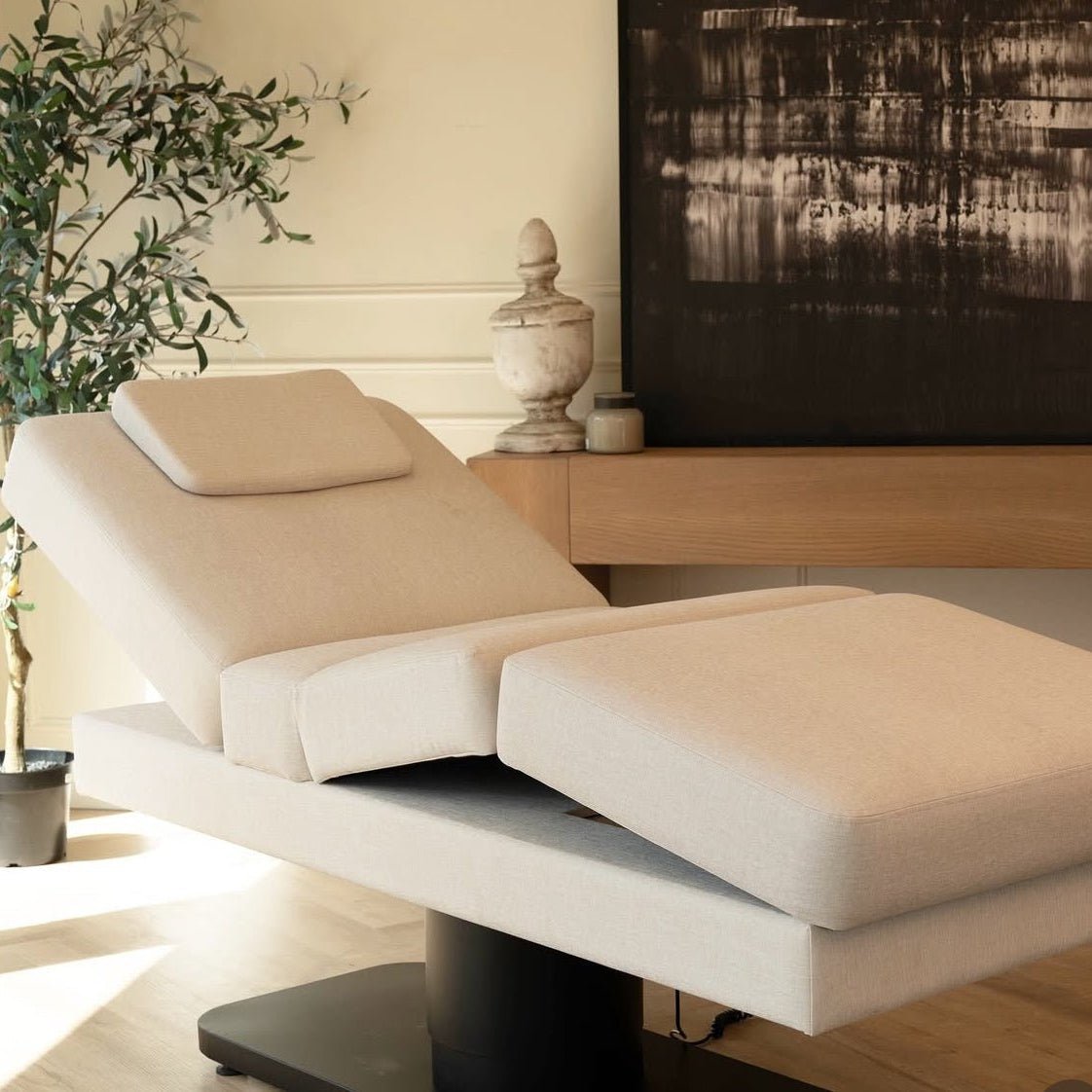
The Vera LOFT includes everything the Vera 360 offers, plus a clicker-recliner mechanism that adjusts the client from fully flat to a true 90-degree upright position. That full 90-degree range is critical if you're doing consultations, prep work, or any service component where the client needs to sit up.
The Vera LOFT is hydraulic, which means no floor cords,no electrical outlet requirements, and no mechanical complexity. It's smooth, reliable, and built for the positioning needs of full-service beauty artists.
For Artists Who Want Complete Electric Automation
The Oxford is for artists who want full power positioning at the touch of a button. Three independent motors. Fully flat positioning. Backrest to 75 degrees. Independent knee raise.
The Oxford is also the only Plush + Oak bed with a face opening for traditional prone massage — though PMU artists rarely need this feature.
The real differentiator of the Oxford is its aesthetics: it's the only electric spa bed on the market with no visible hardware. No exposed metal arms. No mechanical components showing. Just beautiful, uninterrupted upholstery.
If you need drop Elbow Positioning for PMU Services, you'll love the Oxford PMU which features a tapered headrest. 
For a $400 PMU artist, this level of visual refinement communicates expertise and investment.
The Complete Pmu Studio Setup
Here's what you need:
One Plush + Oak bed in a color that matches your brand. The Edda Cloud is the bestseller for pure PMU artists, but choose the model that matches your service mix.
The Stool, designed specifically for artists. Low back. Open rear. Quiet wheels. Positioned at the right height for your chosen bed.
That's the furniture foundation. Add professional lighting, beautiful wall color or art, and design choices that communicate the premium nature of the service.
And because every Plush + Oak bed is made to order, you choose the exact color. Not black. Not the three standard options. The color that tells your brand story. Free Swatch Samples Available!
The Business Math Is Straightforward
A premium PMU bed costs roughly $3,000 to $5,000, depending on the model.
At $300 per appointment, that bed pays for itself in 10-17 appointments.
Most PMU artists at that price point are booked out well beyond that timeline.
What that means: the bed investment doesn't cost you money. It enables you to charge what your work is worth, and it pays for itself almost immediately.
Plus, you're not just paying for the product. You're paying for the quality and longevity. The tensile webbed suspension system under the foam means the bed stays comfortable and supportive for years. You're not replacing it every two years.
Ready to choose the treatment bed that anchors your PMU studio? Explore our PMU bed collection →
See everything we make for permanent makeup studios: Full studio furniture collection →

Written by Courtney Buhler