

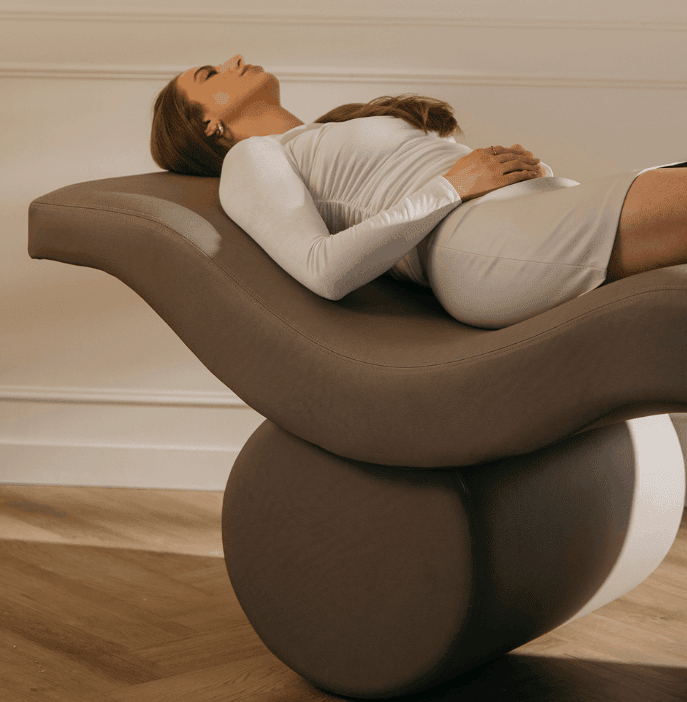
Top 4 Signs Your Salon Bed Is Hurting Your Career
A field guide for the artists working through it — and the founders quietly wondering if it has to be this way.
You didn't get into this work to be in pain by 2 PM.
You got into it for the craft. The precision. The quiet alchemy of hands, product, and a client who walks out looking like a better version of themselves.
But the bed you're working on may be working against you.
Most salon beds were designed to be sold — not to be worked on for ten hours a day. They look the part in the showroom. They photograph well enough. They check the boxes on the spec sheet.
But the body knows. Yours and your client's.
Here are four things that happen when your bed wasn't designed for this work.
01 — Back pain by mid-afternoon

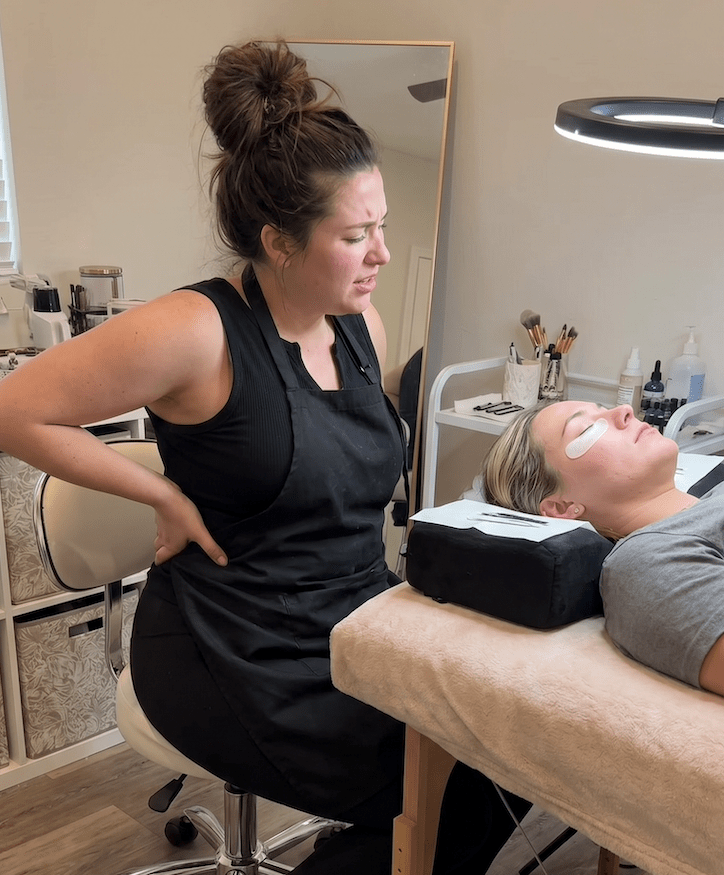
Not because your posture is bad. Because your massage table puts your body in a compromised position from the first client of the day — and compounds it by the last.
You've adjusted your angles. You've stretched between appointments. You've blamed yourself.
A bed that doesn't account for your reach, your access, your working height isn't a bed. It's a daily injury, slowly accruing. The pain that shows up at 2 PM started at 9 AM — you just couldn't feel it yet.
Massage tables are the worst culprits of compounding body injuries (yes, we said injuries). Not a quick injury -- one that happens daily on a micro level and eventually leads to huge issues. This is because massage tables aren't build for services where the practitioner is seated. They have plates on the front of them that force artists to do an awkward straddle, crunch their thighs underneath them, or sit in a sidle saddle positioning.
There is absolutely no way to have proper posture without open leg room. Period.
02 — Clients who can't settle

They shift. They adjust. They never fully relax.
A flat surface creates pressure points at the heaviest contact areas — hips, shoulders, or the ever burning tailbone sciatica nerve. The body resists it. It's not anxiety. It's physics.
And a client who can't relax can't be sculpted, soothed, or transformed. The bed is the foundation of the entire experience. When the foundation fails, everything you do on top of it is fighting upstream.
If you've experience clients shifting from side to side during appointments or moving their legs, know that this is a tell-tale sign of extreme discomfort. Clients know that you're doing a meticulously detailed service. They don't shift for fun - if they shift around, it is not from mild discomfort, it's because internally they are in bonafide pain.
In fact -- this is why our founder created Plush + Oak beds in the first place. She was a lash artist and educator seeing far too many careers end early from bodies "giving up" and needing to pivot away from services due to body injury. There wasn't anything made just for them. As a client and lash lover herself, Courtney actually stopped getting lashes done because she couldn't stand to lay on a flat bed for 2 hours as it flared her sciatic nerve pain.
Sometimes a client rebooking isn't because they don't love the service, its because the discomfort isn't worth it.
03 — You're hunching to see their face

The bed feels set up correctly until you're two hours in and your neck disagrees.
When leg room is designed as an afterthought, you compensate with your body. Every day. You lean forward. You twist. You hover at angles that don't release at the end of the shift.
The bed should let you stand tall. Not bend you toward your work.
04 — You're adding accessories to fix a bed problem

Toppers. Knee bolsters. Rolled towels. Extra pillows.
You've built a workaround system for a comfort failure the bed should have solved from day one.
Every accessory is a small admission — that the foundation isn't enough. Every workaround is something to wash, replace, store, justify. The bed becomes a chore instead of an instrument.
The worst part? When all the accessories are added you're set up looks even less professional than it did to start with. You're trying to run a professional business with a layered pillow nest that screams "make shift".
The Quiet Cost
This isn't about luxury. It's about longevity.
A career in this industry is built on two things: the work of your hands, and the trust of the people on your bed. A bed that compromises your body shortens the first. A bed that compromises their comfort erodes the second.
You can keep adjusting. You can keep stretching. You can keep stacking towels.
Or you can work on something that was sculpted for the artist — not the showroom.
What a bed should do (and what ours do)
Elevate the interior design. Perfect client comfort. Protect your posture. 
You don't want the client to think about the bed. You shouldn't think about the bed. The only thing either of you should be focussing on is the execution and enjoyment of the service. 
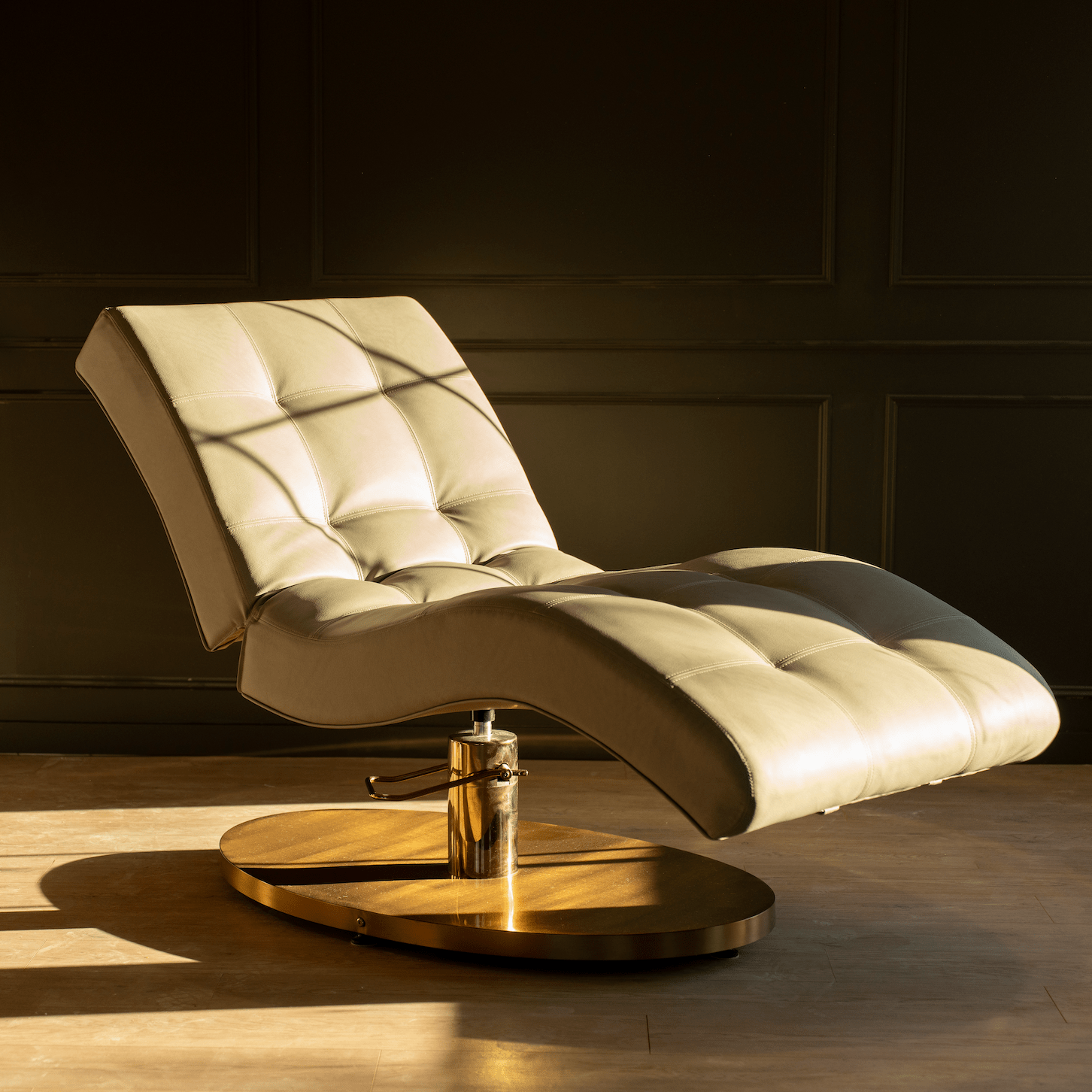
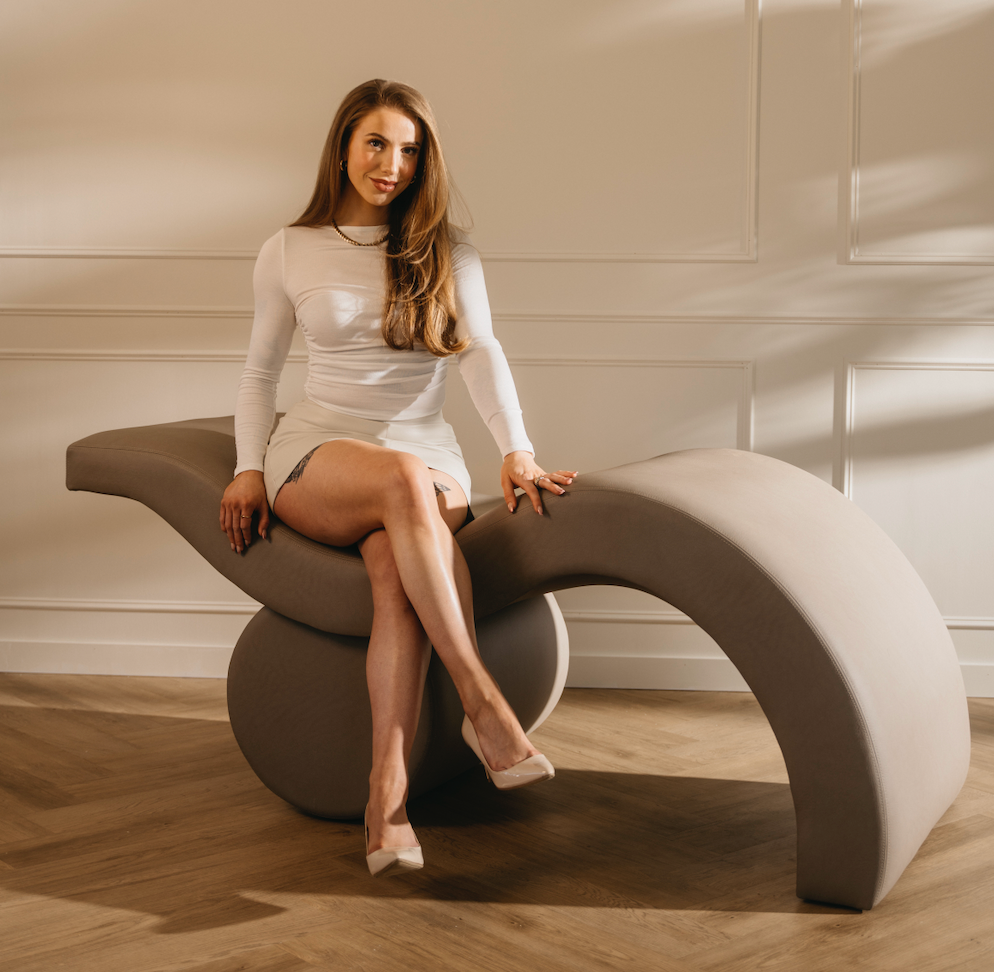
That's what we build. Sculpted, not assembled. Designed by people who understand that the bed isn't a product — it's a partner. North American hands. No middlemen. No compromise.
The future of salon furniture isn't more accessories.
It's beds that don't need them.
Aesthetic. Functional. Made to order.
From us, to you.

Written by Courtney Buhler