


What goop's First Spa Room Gets Right
goop's first treatment room opened at Marin Country Mart with one bed, one metal and no topper. Four specifying decisions worth stealing, whatever you are building.

goop opened its first spa treatment room at Marin Country Mart in California. One room, one bed, three signature facials on the menu.
It is worth studying, and not for the reason you would expect. The interesting part is not whose name is on the door. It is that the room makes four specifying decisions most treatment spaces get backwards — and it makes all four before a single accessory is chosen.
The bed was specified as furniture, not equipment
Most rooms are built the other way round. Paint, floor, cabinetry and lighting get decided first, and then a bed is bought to go in the space — chosen from a catalogue, on function and price, usually last, usually with whatever is left.
Look at the proportions of any treatment room and that order stops making sense. The bed is the largest object in the space by a wide margin. It is the first thing a client sees when the door opens and the only thing they will be in contact with for the next ninety minutes. Specifying it last means making the single biggest visual decision in the room with the end of the budget.
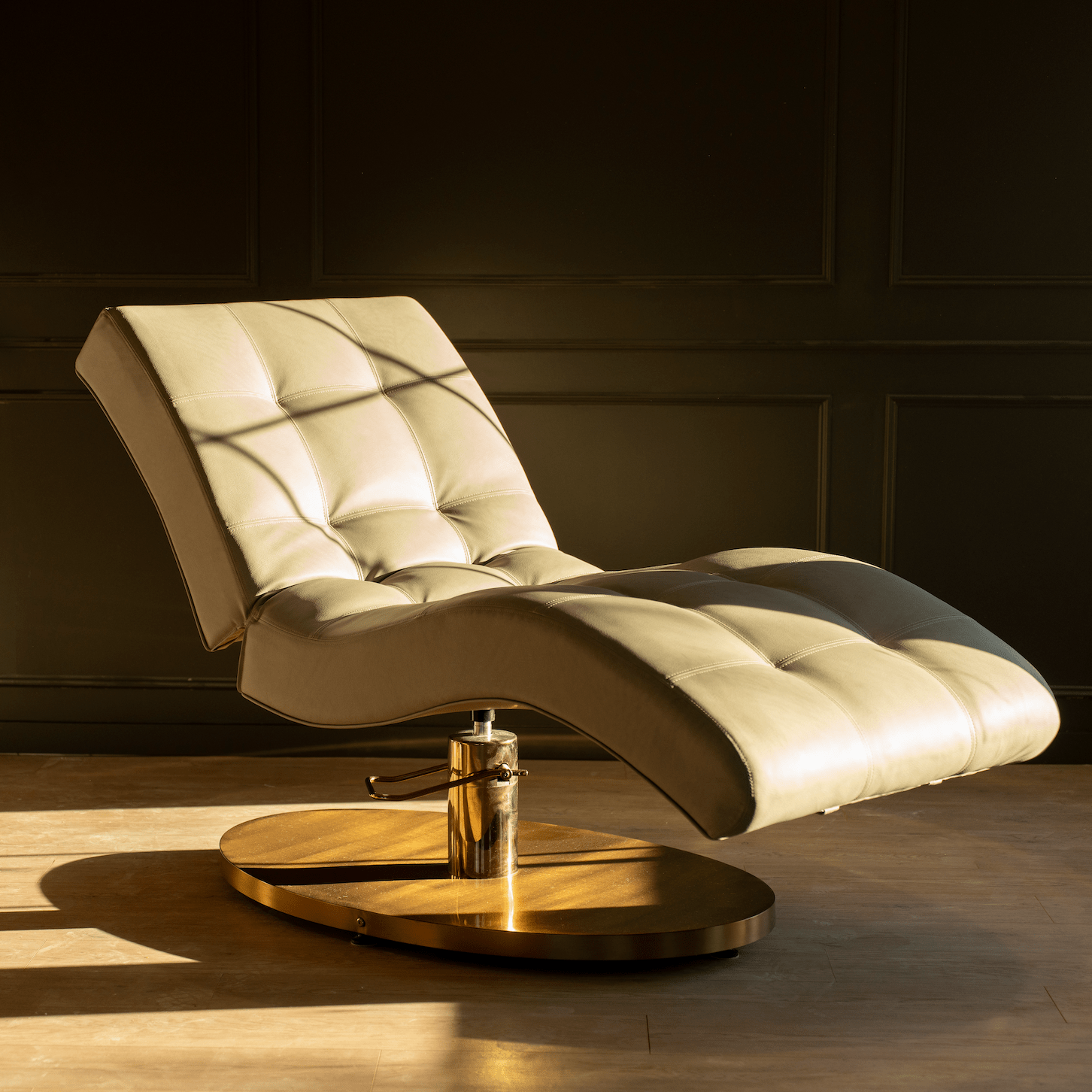
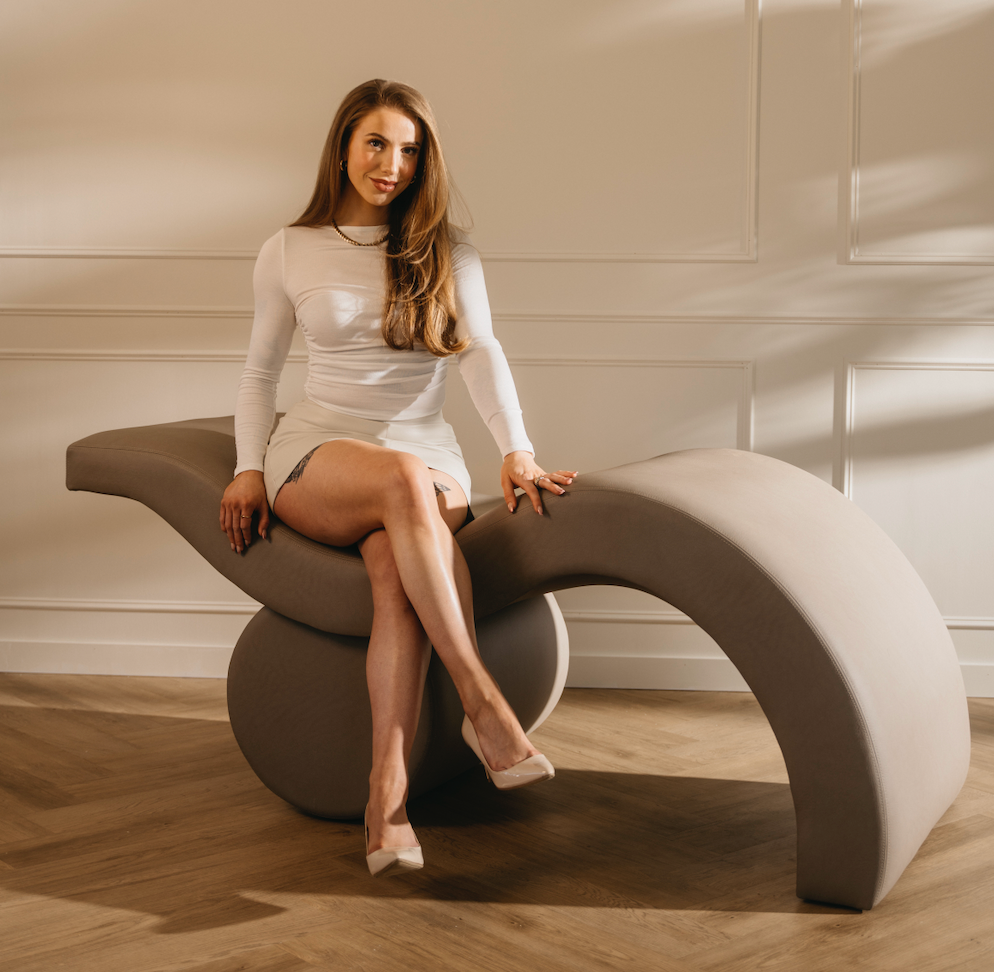
goop's room was put together by Dani Shields, whose facials are built on clean beauty, skin science and a great deal of hands-on work. The bed is an Oxford — three-motor electric — in Bone, on a bronzed brass base. The look and the mechanics were settled together rather than one after the other.
The bed is the largest object in the room. Specifying it last means making the biggest visual decision with whatever is left.
Quiet upholstery, warm metal
The default in this industry is black upholstery on chrome, or black on matte black. It is practical and it hides everything, which is exactly why it is the default — and it is also why so many treatment rooms read as clinical rather than considered. Black upholstery on a metal frame looks like equipment because that is what equipment looks like.
Bone on bronzed brass inverts it. The metal carries the warmth and does the decorative work; the upholstery stays quiet and lets the shape of the bed be the thing you notice. It is the same logic as an unlacquered brass tap against a plain stone counter — one warm element, everything else calm.

The swatch was judged in the room, not on a screen
Swatches were sent out and the final call was made on the physical samples rather than from a website. Whatever you make of the celebrity end of that story, the method is the right one, and it is free.
Screens lie about warmth. A shade that reads as a clean greige on a phone will read distinctly pink or distinctly yellow against lime plaster under a warm bulb at four in the afternoon. The only reliable test is the physical swatch, held against the actual wall the bed will sit in front of, at the hour you actually work. If you run evenings, judge it in the evening.
Order the swatches. Put them up for a week. It is the cheapest insurance available on a four-figure decision.
If it needs a topper, the bed is wrong
The detail that says the most about this room is one that does not appear in it. No topper was needed. The team expected to add one, as almost everyone does, and then did not — the bed was guest-ready out of the crate.
A topper is a tell. It is a comfort patch on a bed that was not comfortable enough, and it costs more than it looks like it does. It breaks the line of the furniture you paid for. It slides. It adds a laundry item to every single turnover. And it quietly tells the client that the thing they are lying on was not, on its own, sufficient.
Early guests reported the opposite of the usual facial experience — feeling supported and held rather than perched on a flat plane with a towel over it. That is a function of the curve and the upholstery being right in the first place, not of anything added afterwards.
What to take from it
Not the bed, necessarily. The transferable part is the order of operations.
Choose the bed first, because it is the biggest object and the one your client actually touches. Let one warm metal do the decorative work and keep the upholstery quiet. Judge every colour physically, in your own light, at your own working hour. And treat the need for a topper as evidence that something upstream is wrong, rather than as a normal running cost.
None of that requires a famous name above the door. It requires deciding in the right order.
We wrote about the collaboration itself when the room opened — the original announcement is here.


