



Massage Room Setup: A Guide to Furniture, Lighting, and Layout
A client walks into your massage room and makes a judgment before the service begins. This happens in the first few seconds. It is not a deliberate assessment — it is the accumulated impression of the space: what it looks like, what it feels like to be in, and whether it communicates that the person who works here takes their practice seriously.
That judgment influences what clients are willing to pay, how much they trust the session ahead, and whether they return. Setting up your massage room intentionally is not vanity — it is practice-building.
What Clients Read First
The bed is the dominant visual element in any massage room. It is the largest piece, it is in the center of the space, and it tells clients more about your practice than any other single thing in the room.
A portable massage table — even a high-quality one — communicates something specific: functional, temporary, accessible. It looks like something that folds up and goes in a car. In a permanent practice room, this creates a subtle dissonance. The room says "established practice" while the furniture says "I could pack up tomorrow."
A permanent bed — one that looks like it belongs in the room — communicates investment, permanence, and commitment to the practice. That impression translates directly into what clients are willing to pay and how much they trust what follows.
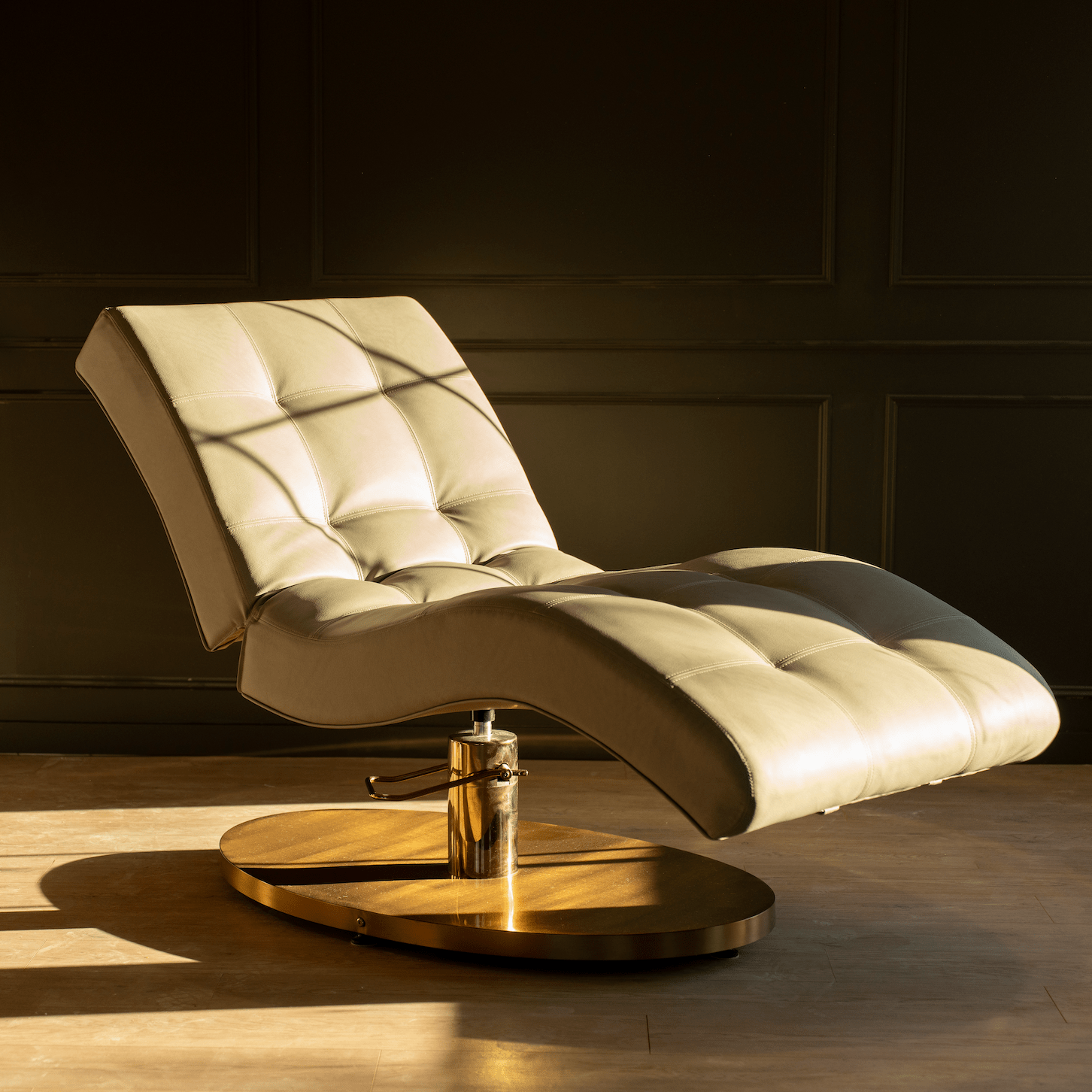
The Oxford from Plush + Oak was designed for exactly this impression. It is an electric spa bed with three independent motors — base height, backrest, and knee raise — but the thing that distinguishes it visually is what is absent: there is zero visible hardware. No exposed metal arms, no visible hinges, no mechanical components from any angle. Just clean upholstery on every surface. It is the only electric spa bed on the market built this way. The result is a bed that looks like premium furniture, not medical equipment.
It also has a face opening — the specific feature that makes it the right choice for prone massage work.
The Five Elements Of A Massage Room That Works
Once you know what the room needs to accomplish — client trust, relaxation, professional credibility — the design decisions become clearer. Here are the five elements that actually move the needle.
The Bed
Your bed does more work than anything else in the room. It is the visual anchor, the functional tool, and the primary sensory experience your client has during treatment. For a dedicated massage practice, the Oxford is the right choice: face opening for prone work, three-motor positioning for full flexibility, and zero visible hardware so the treatment experience is not interrupted by the sight of mechanical equipment.
The Oxford is also built on a tensile webbed suspension system — woven webbing under the foam rather than plywood. The client is suspended on the surface rather than compressed against a hard base. This produces a quality of comfort that standard tables cannot replicate, and it preserves the foam so the bed maintains its feel for years rather than flattening within a year or two of heavy use.
Lighting
This is the highest-impact and most consistently underinvested element in massage room design. Overhead fluorescent or bright white light creates the wrong environment entirely — it signals alertness, examination, and clinical space. That is exactly the opposite of what a massage room should do.
Layered warm lighting changes a room completely. Dimmable overhead warm-temperature LEDs (2700K or lower) for baseline light. Accent lighting at floor or table level for ambient warmth. A targeted task light accessible when needed for pre-session assessment. Dimmable controls so you can adjust brightness through the session — bright for consultation and setup, dim during treatment.
The investment in proper lighting is modest relative to its impact. This is one of the most cost-effective upgrades a massage room can make.
Temperature And Sensory Environment
A client who is cold cannot fully relax. A client in sensory noise — strong scent, loud HVAC, a phone buzzing on your counter — holds low-level tension throughout the session. The physical outcome of the work suffers.
Temperature: 68 to 70 degrees Fahrenheit is the target during treatment, with a warmed blanket available for clients who run cold. The bed surface itself should feel warm to the touch — a cold surface on initial contact creates a brief startle response that delays the onset of relaxation.
Sound: A sound machine or dedicated ambient sound system running at low volume masks HVAC noise, outside sounds, and the small environmental noises that prevent deep relaxation. Nature sounds or low-frequency white noise are effective and unobtrusive. Silence is only an asset if the room is completely isolated — in most practice spaces, true silence is actually filled with low-level noise that disrupts the session without practitioners noticing.
Scent: Subtle, diffused therapeutic scents (lavender, eucalyptus, sandalwood) support relaxation when used thoughtfully. The key is subtle — a diffuser in the corner running at low output, not a strong fragrance in a small enclosed space. Clients with sensory sensitivities should be asked about scent preferences before the session.
Organization And Cleanliness
Organization is a trust signal. A room where everything has a place, surfaces are clear, and supplies are stored rather than scattered communicates to the client: the person who works here is disciplined and careful. That is exactly the quality they want to believe applies to the hands they are about to trust with their body.
Visible clutter — product bottles on surfaces, a stack of folded linens on a chair, equipment pushed into a corner — creates low-level anxiety that works against the room's purpose. Closed storage for supplies. A single clean trolley with only what is needed for the session. Everything else out of sight.
Design Coherence
The room should look like a room, not a collection of functional objects. Wall color, the color of the bed, lighting fixtures, and any accent elements should form a coherent visual language rather than feeling assembled from separate purchases.
This starts with the bed. Because Plush + Oak beds are made to order, you choose the exact color. That choice becomes the anchor for every other decision. A deep charcoal bed calls for warm neutral walls, warm lighting, and clean lines. A cream or ivory bed opens up more palette options. A sage or deep green reads as spa-like and pairs with natural textures. Choose your bed color first. Design the room around it.
Building The Room Around The Oxford
The Oxford Full gives you complete positioning control without complexity. Three independent motors mean you can adjust base height without changing the back angle, raise the knee independently, and move the client in and out of anti-gravity positioning easily. The backrest reaches 75 degrees for consultations and session transitions.
For prone work, the face opening positions the client correctly without the hardware and padding challenges of a portable cradle attachment. The tensile webbed suspension system under the foam means the client is suspended rather than compressed against a hard base — which translates to a different quality of relaxation, especially over a 90-minute session.
No visible hardware from any angle means that during the service, the client's visual field — if they open their eyes — does not include mechanical equipment. It includes a bed that looks like furniture. That is a small thing that adds to the cumulative impression of a professional environment.
The Math On Environment
More than 93% of Plush + Oak customers saw their revenue increase after upgrading their treatment furniture. 87% said the upgrade helped attract new clients. 94% reported better client retention.
The room earns its investment. When the environment matches the quality of the work, clients respond. They come back. They send people. And they pay rates that match what the room and the work communicate.
A well-designed massage room with the right bed can justify a $20 to $40 higher rate per session than the same practitioner in a poorly designed room. Over a full week of practice, that difference compounds. Over a year, it pays for the bed investment many times over.
Visit plushandoak.com to configure the Oxford and design the massage room that works as hard as the practice it holds.
Ready to build the massage room your practice deserves?
Explore massage room furniture → | See the Oxford collection →


